

 español



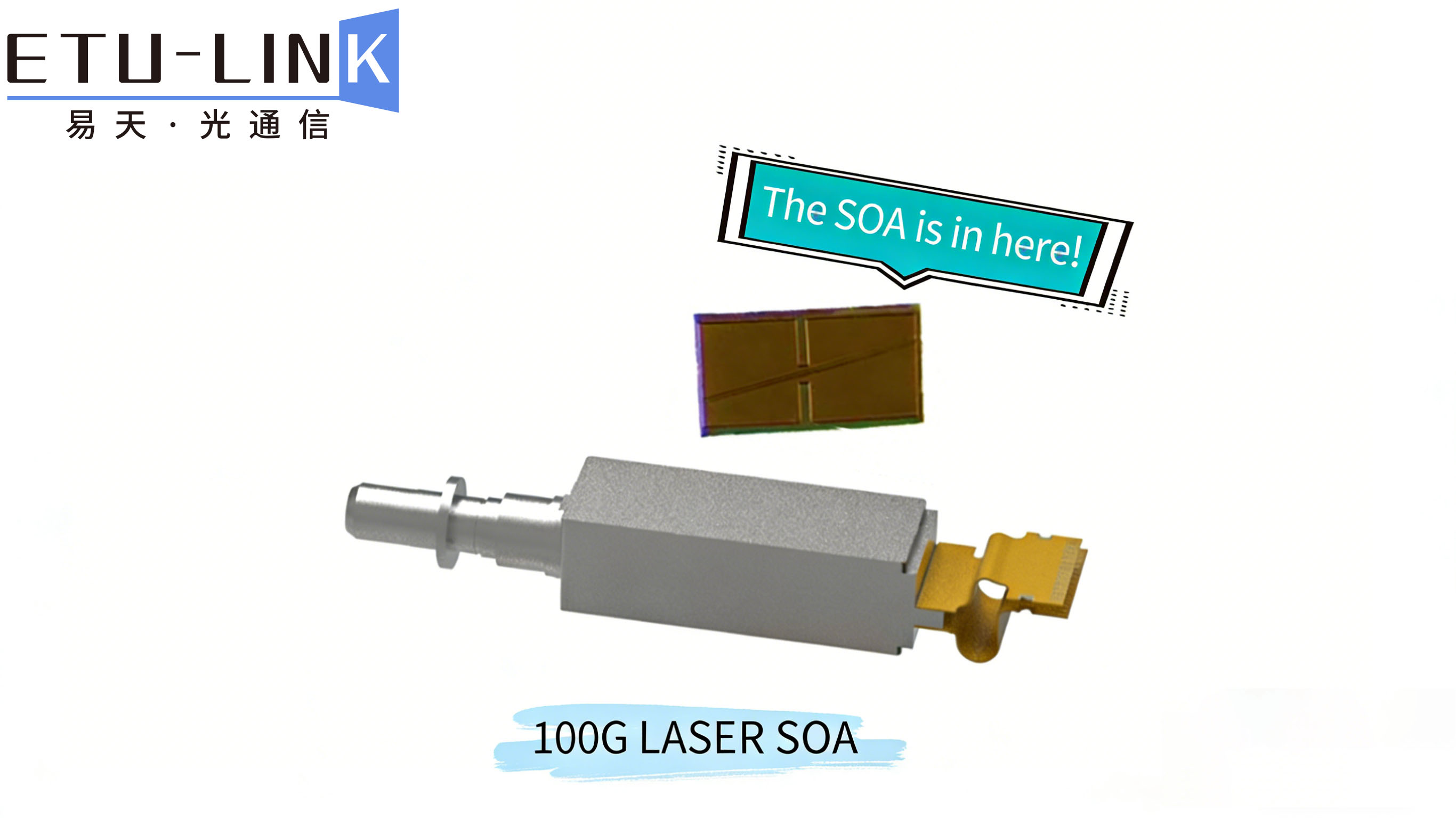
¿Qué es SOA?
En el campo de la comunicación óptica y los módulos ópticos, cuando se habla de amplificación de señales ópticas con los colegas, lo primero que se puede pensar es en los amplificadores de fibra dopada. Sin embargo, existe un dispositivo clave que, aunque pequeño en tamaño, desempeña un papel indispensable en cada vez más situaciones.
—
el amplificador óptico semiconductor.
¿Qué es exactamente un SOA? ¿En qué se diferencia del EDFA que conocemos? Hoy profundizaremos en este componente tan versátil en el campo de la amplificación óptica.
I. ¿Qué es SOA?
El SOA, o amplificador óptico semiconductor, comparte un "núcleo" similar con los láseres semiconductores de uso común en su principio de funcionamiento.
—
Ambas son estructuras de guía de ondas activas. Cuando una señal óptica pasa a través de esta guía de ondas, se produce una inversión de población bajo la influencia de la corriente inyectada, lo que da lugar a la amplificación de la señal mediante emisión estimulada.
En pocas palabras, un SOA es un láser semiconductor sin retroalimentación o con retroalimentación suprimida. Es este diseño "sin retroalimentación" el que le permite amplificar la señal de luz incidente en una sola pasada.
II
.
Centro
PAG
Parámetros de SOA
Para comprender el valor de SOA, debemos centrarnos en varias métricas clave de rendimiento:
Ganancia y ancho de banda
Los chips SOA comerciales modernos pueden alcanzar una ganancia de 20-30 dB y cubrir la banda C o la banda L. En comparación con el ancho de banda de ganancia de aproximadamente 35-40 nm de los EDFA, los SOA tienen un ancho de banda de ganancia mayor, que incluso cubre toda la banda O a la banda C.
Ruido
F
figura
El factor de ruido de un SOA típico suele ser de 7 a 9 dB, ligeramente superior al de un EDFA (4-6 dB). Este es un factor que implica que, en algunos casos, es necesario sopesar las ventajas y desventajas del SOA.
Saturado
O
salida
PAG
propietario
Actualmente, la potencia de salida saturada de los SOA de alto rendimiento puede alcanzar los +15 dBm o incluso más, lo cual es suficiente para satisfacer las necesidades de la mayoría de las aplicaciones.
Polarización
D
dependencia
Los amplificadores ópticos semiconductores (SOA) tradicionales son sensibles al estado de polarización de las señales ópticas, pero la tecnología moderna puede lograr la independencia de la polarización, y la generación de gradiente de polarización (PDG) se puede controlar dentro de 1 dB.
III. SOA vs. EDFA: Cada uno tiene sus ventajas
Dado que ya existe un EDFA maduro, ¿por qué sigue siendo necesario el SOA? Esto debe compararse desde varias perspectivas:
Tamaño e integración
El SOA es un chip semiconductor, generalmente del orden de los milímetros, que puede integrarse con otros dispositivos fotónicos. El EDFA, por otro lado, requiere de varios metros a decenas de metros de fibra dopada, lo que resulta en un tamaño mayor.
Consumo de energía
Los SOA suelen tener una corriente de excitación de decenas a cientos de miliamperios y un consumo de energía del orden de cientos de milivatios. Los EDFA, por otro lado, requieren una potencia de bombeo de cientos de milivatios o incluso varios vatios.
Velocidad de respuesta
Esta es una ventaja significativa del SOA. El tiempo de respuesta de ganancia del EDFA se encuentra en el rango de los milisegundos, mientras que la vida útil de los portadores del SOA se encuentra en el rango de los nanosegundos. Esto significa que el SOA puede responder a señales que cambian rápidamente.
Efectos no lineales
La estructura de guía de ondas activa del SOA hace que sus efectos no lineales sean mucho más fuertes que los del EDFA, lo cual es a la vez una ventaja y un desafío.
IV. Principales escenarios de aplicación de SOA
Basándose en las características anteriores, SOA demuestra un valor insustituible en las siguientes áreas:
1. Energía
do
compensación en
O
óptico
norte
redes
En redes PON o interconexiones de centros de datos, el SOA puede utilizarse como preamplificador o amplificador de potencia para compensar las pérdidas introducidas por los componentes pasivos. Su pequeño tamaño y bajo consumo energético lo hacen especialmente adecuado para la integración a nivel de placa o módulo.
2. Óptica
S
brujas y
GRAMO
comió
do
control
Gracias a la velocidad de respuesta de nanosegundos de los amplificadores ópticos semiconductores (SOA), es posible lograr una conmutación rápida de las trayectorias ópticas controlando la corriente inyectada. La activación de los SOA es una tecnología clave en escenarios como la conmutación de paquetes ópticos y la recepción en modo ráfaga.
3.
Longitud de onda
do
onversión
Mediante la utilización del efecto de modulación de ganancia cruzada o modulación de fase cruzada en el SOA, se puede lograr una conversión de longitud de onda totalmente óptica, lo que tiene un potencial de aplicación en futuras redes totalmente ópticas.
4. Alta velocidad
S
señal
PAG
procesamiento
Las características no lineales de los amplificadores ópticos semiconductores (SOA) permiten implementar funciones como la regeneración 3R totalmente óptica y las compuertas lógicas ópticas. Si bien la mayoría de estas aplicaciones aún se encuentran en fase de laboratorio, demuestran el potencial de los SOA en el procesamiento avanzado de señales ópticas.
V. Evolución y tendencias tecnológicas
Con el desarrollo de la tecnología 5G, la computación en la nube y la inteligencia artificial, la demanda de módulos ópticos está experimentando un crecimiento explosivo. Según la firma de investigación de mercado Yole, se prevé que el mercado global de módulos ópticos alcance aproximadamente los 15.000 millones de dólares en 2027. En este contexto, la tecnología SOA también evoluciona continuamente.
Integración
: Integrar SOA con moduladores, detectores, etc., en el mismo chip para lograr circuitos integrados fotónicos con mayor densidad funcional.
Mejora del rendimiento
Mediante el uso de nuevas estructuras de materiales, como pozos cuánticos y puntos cuánticos, se reduce aún más el nivel de ruido y se mejora la potencia de salida saturada.
Nuevas solicitudes
SOA también busca nuevas aplicaciones en campos de vanguardia como la comunicación coherente y la comunicación cuántica.
VI. Conclusión
SOA no pretende reemplazar a EDFA, sino llenar los vacíos en los escenarios de aplicación que EDFA no puede cubrir.
—
Aquellos que requieren tamaño reducido, bajo consumo de energía y respuesta rápida. Con la creciente integración de módulos ópticos, los SOA se están convirtiendo en una parte indispensable del campo de las comunicaciones ópticas debido a sus características únicas.
Categorías
nuevo blog
Etiquetas
nuevos productos
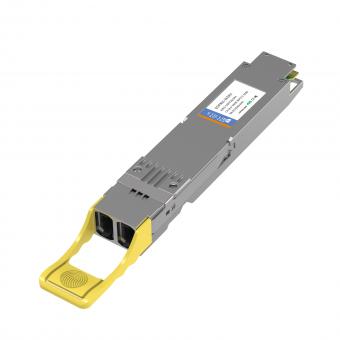
Transceptor óptico 800G OSFP 2×DR4 1310nm 500M MPO12 DDM Lee mas
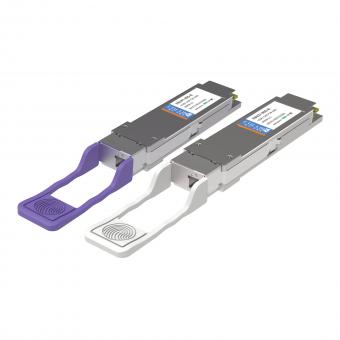
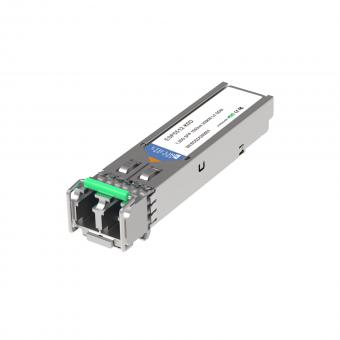
Transceptor óptico LC SFP de 1,25 G, 1550 nm y 200 km Lee mas
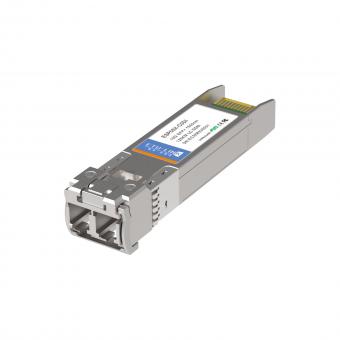

Transceptor óptico LC de 100G QSFP28 LR con sonda Lambda única de 10KM Lee mas
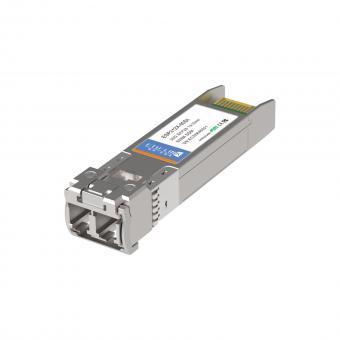
Transceptor óptico de 25G SFP28 ZR 1310nm los 80KM LC Lee mas
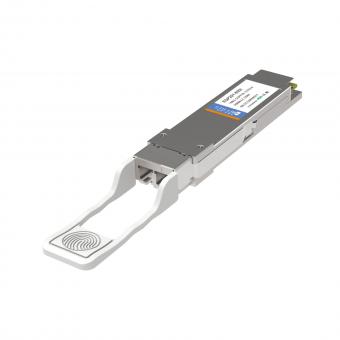
Transceptor óptico de generación II de 100G QSFP28 ZR4 80KM LC Lee mas
Para consultas sobre nuestros productos o lista de precios, déjenoslo y nos pondremos en contacto dentro de las 24 horas.


 13th Floor, Building 6, Honghualing Base, Nanshan Intelligent Manufacturing Base, Liuxian Avenue, Taoyuan Street, Xili, Nanshan District, Shenzhen, China
© Derechos de autor: 2026 ETU-Link Technology CO ., LTD Reservados todos los derechos.

Soporta red IPv6


