

 español



¿Qué son PAM4 y NRZ?
Análisis comparativo de las tecnologías de modulación PAM4 y NRZ
PAM4 y NRZ son dos tecnologías de modulación de señal digital de uso generalizado en la comunicación óptica y la transmisión de datos de alta velocidad. Sus diferencias fundamentales radican en el número de niveles de señal, la eficiencia de transmisión y la capacidad de resistencia a las interferencias. El siguiente análisis las examinará desde tres perspectivas: principios, características y escenarios de aplicación.
I. NRZ (Codificación sin retorno a cero)
1. Definición y principio
NRZ (Non-Return-to-Zero) es un método de codificación binaria que utiliza niveles de voltaje alto y bajo para representar "1" y "0" en una señal digital, respectivamente. La señal permanece en un nivel constante durante cada ciclo de reloj y no regresa a cero, de ahí su nombre: "codificación sin retorno a cero".

2. Características
Simple para I implementar El método de codificación es intuitivo, la sobrecarga de hardware es mínima y la eficiencia en la utilización del ancho de banda es alta.
Limitado norte ruido I comunidad Solo tiene dos niveles de estado con un amplio intervalo entre ellos. Presenta cierta inmunidad al ruido a velocidades medias, pero resulta insuficiente en entornos electromagnéticos complejos o de alta velocidad.
Hay un componente de CC El espectro de la señal contiene un componente de corriente continua (CC), lo que puede provocar una deriva de la línea base y atenuación de la señal durante la transmisión.
Requiere sincronización de reloj independiente. La señal en sí no contiene información de reloj y requiere una línea de reloj adicional o un mecanismo de recuperación de datos de reloj (CDR).
3. Escenarios de aplicación
La tecnología NRZ se utiliza ampliamente en escenarios de baja a media velocidad, sensibles al costo y de alta confiabilidad, como Ethernet de baja velocidad, interfaces chip a chip, PCIe Gen1–Gen4 e interfaces de comunicación serial como UART, RS-232/422/485. En el campo de la comunicación óptica, NRZ se usa comúnmente en módulos ópticos con velocidades inferiores a 100 Gbps.

II. PAM4 (Modulación de amplitud de pulso de cuatro niveles)
1. Definición y principio
PAM4 (Modulación de Amplitud de Pulso de 4 Niveles) es una técnica de modulación de amplitud de pulso de cuatro niveles que utiliza cuatro niveles de señal diferentes para representar los símbolos "00", "01", "10" y "11". Puede transmitir 2 bits de información por ciclo de reloj, lo que mejora significativamente la eficiencia de transmisión en comparación con NRZ.

2. Características
Alto T transmisión mi eficiencia : Con la misma velocidad de símbolos, la velocidad de transmisión de datos es el doble que la de NRZ.
Bajo R resistencia a I interferencia El intervalo entre los cuatro niveles es pequeño, lo que lo hace más sensible al ruido y las interferencias. La tasa de error de bits (BER) es teóricamente mayor que la de NRZ, y requiere una mayor calidad de canal.
Dependencia de do complejo S señal PAG procesamiento Para garantizar la fiabilidad, normalmente es necesario combinar PAM4 con técnicas de procesamiento de señales digitales, como la corrección de errores hacia adelante (FEC) y la ecualización, lo que aumenta la complejidad del sistema y el consumo de energía.
Adecuado para H alto- S orina y L largo- D instancia T transmisión A pesar de su reducida inmunidad al ruido, la tecnología PAM4 se ha convertido en la opción predominante en escenarios de alta velocidad y larga distancia debido a su alta eficiencia de transmisión y a la combinación de dispositivos optoelectrónicos y algoritmos avanzados.
3. Escenarios de aplicación
PAM4 se ha convertido en una tecnología fundamental en campos como Ethernet de alta velocidad, interconexión de centros de datos, portadora móvil 5G, interfaces de computación y almacenamiento, y redes vehiculares.
Ethernet de alta velocidad y centros de datos Este es el método de modulación principal para los módulos Ethernet de 400G/800G y los módulos ópticos de 200G/400G.
red portadora 5G : Módulos ópticos de alta velocidad utilizados en redes 5G de acceso, transporte y retorno, compatibles con diversos escenarios como eMBB, uRLLC y mMTC.
Interfaz de computación y almacenamiento PCIe 6.0 utiliza señalización PAM4, con una velocidad de enlace único de hasta 64 GT/s.
Ethernet en el vehículo La tecnología Ethernet multigigabit para vehículos basada en PAM4 alcanza velocidades de transmisión de 2,5 Gbps, 5 Gbps y 10 Gbps.

III. Resumen
La elección entre NRZ y PAM4 es esencialmente una compensación entre la eficiencia de transmisión y la relación señal/ruido.
NRZ Ofrece ventajas en términos de menor complejidad y mayor tolerancia al ruido, lo que lo hace adecuado para sistemas de velocidad baja a media que son sensibles al costo y la latencia.
PAM4 Logra un mayor rendimiento de datos con el mismo ancho de banda, pero requiere un procesamiento de señal complejo para compensar la menor inmunidad al ruido, lo que la convierte en la tecnología predominante en los escenarios actuales de interconexión de alta velocidad.
A medida que los centros de datos, los clústeres de computación de IA y las interfaces de próxima generación evolucionan hacia 800G y 1,6T, PAM4 seguirá desempeñando un papel cada vez más importante en módulos ópticos e interconexiones de cable de cobre de alta velocidad, mientras que NRZ seguirá manteniendo su valor clave en interconexiones a bordo de baja a media velocidad, baja potencia y baja latencia. enlaces ts y del plano de control.
Categorías
nuevo blog
Etiquetas
nuevos productos
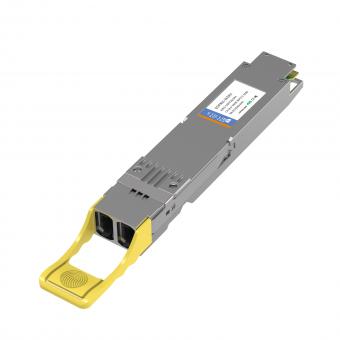
Transceptor óptico 800G OSFP 2×DR4 1310nm 500M MPO12 DDM Lee mas
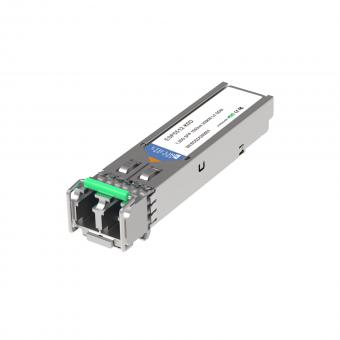
Transceptor óptico LC SFP de 1,25 G, 1550 nm y 200 km Lee mas

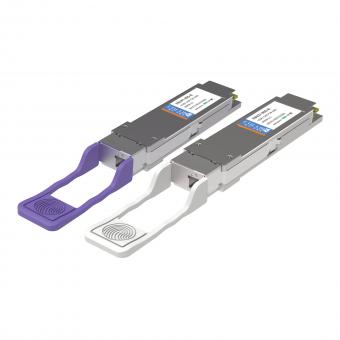
Transceptor óptico LC de 100G QSFP28 LR con sonda Lambda única de 10KM Lee mas
Transceptor óptico de 25G SFP28 ZR 1310nm los 80KM LC Lee mas
Transceptor óptico de generación II de 100G QSFP28 ZR4 80KM LC Lee mas
Para consultas sobre nuestros productos o lista de precios, déjenoslo y nos pondremos en contacto dentro de las 24 horas.


 13th Floor, Building 6, Honghualing Base, Nanshan Intelligent Manufacturing Base, Liuxian Avenue, Taoyuan Street, Xili, Nanshan District, Shenzhen, China
© Derechos de autor: 2026 ETU-Link Technology CO ., LTD Reservados todos los derechos.

Soporta red IPv6


