

 español



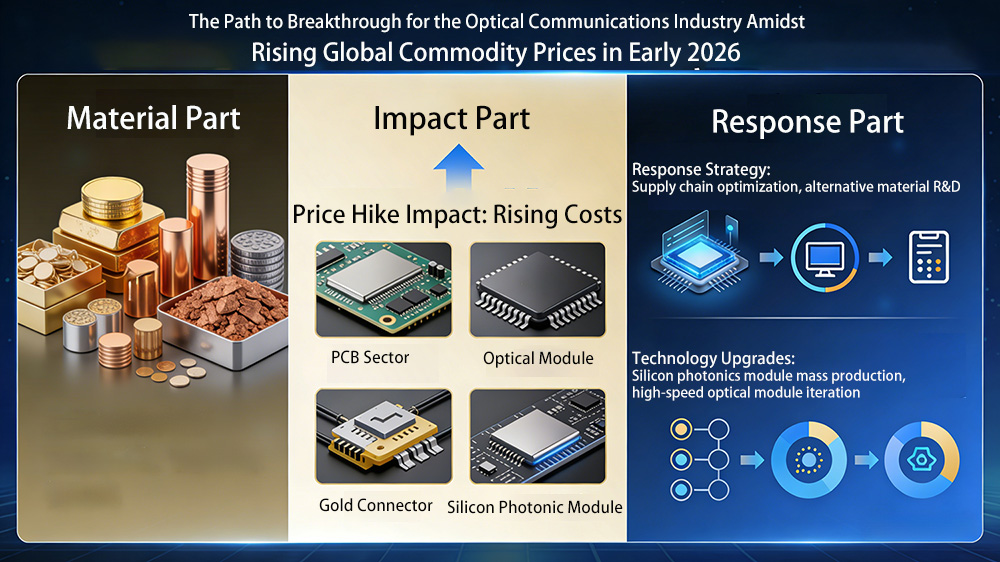
El camino innovador para la industria de las comunicaciones ópticas en medio del aumento de los costos de las materias primas
A principios de 2026, los mercados mundiales de materias primas experimentaron una mayor volatilidad: el precio del oro superó los 5189 dólares por onza, y los precios de metales no ferrosos como el cobre y el estaño aumentaron más de un 20 % interanual. Los precios de la resina epoxi y la fibra de vidrio, materias primas clave para las placas PCB, también mantuvieron su tendencia alcista. Para la industria de módulos ópticos, estas materias primas constituyen la base de la fabricación de productos: componentes críticos como pines metálicos, conectores de cables y contactos dorados en las placas PCB dependen de metales preciosos y no ferrosos. El aumento de los precios de las materias primas se está trasladando de los costes a las operaciones comerciales, y los fabricantes de módulos ópticos se enfrentan al doble reto de la reducción de beneficios y la gestión de la cadena de suministro.
I. Módulos ópticos "Dependencia del metal": La proporción del coste de las materias primas en el producto
Si bien los módulos ópticos son productos de alta tecnología, los costos de las materias primas representan hasta un 60%-70% del costo total, siendo los materiales metálicos uno de los principales rubros de costo.
(1).
Dedos y conectores de oro
:Los dedos dorados (puntos de contacto chapados en oro en la placa PCB) del módulo óptico deben utilizar una capa de chapado en oro de alta pureza para garantizar la estabilidad y la resistencia a la corrosión de la transmisión de la señal.
(2).
Placas y cables de PCB
Los pines metálicos de las placas PCB, los núcleos de cobre de los cables conductores y las carcasas de aleación de cobre de los conectores dependen de metales no ferrosos, como el cobre y el estaño.
(3).
Materiales auxiliares
:La soldadura de estaño, los disipadores de calor metálicos, etc. también requieren el consumo de metales como el estaño y el aluminio, lo que aumenta aún más la proporción de los costos de la materia prima.
Tomando como ejemplo el módulo SFP28 de 100G, el producto principal en comunicaciones ópticas, cuando el precio del oro sube un 10% y el del cobre un 20%, el coste del metal de un solo módulo aumenta entre 8 y 10 yuanes. Para una línea de producción de módulos de 100G con una producción mensual de 10 000 unidades, el coste mensual se incrementa en varios cientos de miles de yuanes.
II.
Impacto directo de la ola de subida de precios: compresión de beneficios y presión en la negociación de pedidos
Para los fabricantes centrados principalmente en módulos ópticos de gama media y alta, el impacto del aumento de los precios de las materias primas se refleja principalmente en dos dimensiones:
1.
Estrechamiento
PAG
ganancia
METRO
arginas
La industria de módulos ópticos es actualmente altamente competitiva. El margen bruto de los productos de baja y media velocidad, como 10G y 25G, se ha reducido al 15%-20%, mientras que el margen bruto de los productos de alta velocidad, como 100G y 400G, se sitúa en torno al 25%-40%. Si el precio de las materias primas metálicas sigue subiendo y no se puede trasladar íntegramente a las industrias transformadoras, las ganancias corporativas se verán aún más presionadas.
2.
Poder de negociación de pedidos insuficiente
La empresa presta servicios principalmente a proveedores de servicios en la nube de tamaño pequeño y mediano y operadores regionales de telecomunicaciones. Estos clientes son muy sensibles a los precios, y algunos pedidos a largo plazo tienen precios fijos difíciles de ajustar a corto plazo. Por ejemplo, el pedido anual de módulos 25G de la empresa a un operador de telecomunicaciones del sudeste asiático se ha fijado hasta mediados de 2026, mientras que los precios del cobre y el estaño han aumentado más de un 15 % desde finales de 2025, lo que ha provocado que el margen de beneficio real de este pedido disminuya más de lo previsto.
III.
Módulo óptico
Contramedidas: del control de costes a la optimización de la cadena de suministro
Ante el aumento de los precios de las materias primas, las empresas del sector están mitigando el impacto mediante una estrategia tridimensional de “reducción de costes, sustitución y fijación de precios”:
1. Proceso
Oh
optimización para
R
educir
do
consumo
Sin comprometer el rendimiento del producto, se puede garantizar la estabilidad de la transmisión de la señal mediante mejoras de proceso y optimización del diseño de PCB.
2. Sustitución de materiales y producción nacional
Aumentar la proporción de placas PCB y componentes metálicos de producción nacional. Anteriormente, las placas PCB de alta gama dependían principalmente de la importación. Tras la sustitución nacional, no solo se reducirán los costos de adquisición, sino que la producción flexible de los proveedores nacionales también permitirá ajustar rápidamente las especificaciones de los materiales para satisfacer las necesidades de optimización de procesos.
3. A largo plazo
do
contrato
PAG
arroz
L
bloqueo y
I
inventario
A
ajuste
Para las materias primas metálicas clave, firmar acuerdos de adquisición a largo plazo de 3 a 6 meses con los proveedores ascendentes para fijar algunos precios de las materias primas y reducir el impacto de las fluctuaciones a corto plazo; al mismo tiempo, ajustar de manera flexible el inventario de acuerdo con las tendencias de precios y aumentar adecuadamente las existencias cuando los precios de los metales caen en etapas.
IV.
Estrategia a largo plazo ante las tendencias de la industria: compensar las presiones de costos mediante actualizaciones tecnológicas
La esencia del aumento de los precios de las materias primas reside en la presión sistémica sobre los costos de la industria. A largo plazo, las mejoras tecnológicas son una forma importante de compensar estos costos. Estamos acelerando el desarrollo de dos tecnologías:
1. Silicio PAG Hotonics T tecnología R educe do osts
Los módulos fotónicos de silicio utilizan materiales basados en silicio para reemplazar los materiales compuestos III-V en los chips ópticos tradicionales, al mismo tiempo que reducen la cantidad de componentes metálicos utilizados (la cantidad de dedos de oro y cobre utilizados en los módulos fotónicos de silicio se reduce en consecuencia, lo que hace que el costo total de la materia prima sea relativamente controlable).
Mediante el diseño modular de productos, la empresa estandariza piezas metálicas con las mismas especificaciones, lo que aumenta el volumen de adquisición y la eficiencia de la producción. Por ejemplo, al estandarizar las especificaciones de los conectores para los módulos de 100G y 400G, la empresa aumenta el volumen de adquisición de piezas metálicas, obteniendo así descuentos por volumen de proveedores anteriores y controlando razonablemente los costos de adquisición.
V. Conclusión: Resiliencia y oportunidades ante el aumento de precios
El aumento de los precios de las materias primas es un microcosmos de las fluctuaciones cíclicas en la industria de módulos ópticos. Para la industria, las presiones de costos a corto plazo representan tanto un desafío como una oportunidad para optimizar la cadena de suministro y promover las actualizaciones tecnológicas. Mediante mejoras de procesos, la sustitución de materiales y la fijación de precios a largo plazo, el impacto de los aumentos de precios se ha mitigado inicialmente; mientras que la implementación de la tecnología fotónica de silicio y la integración modular sientan las bases para la reducción de costos a largo plazo y una mayor competitividad.
Ante el continuo crecimiento de la demanda global de módulos ópticos, las empresas con sólidas capacidades de control de costos y una rápida iteración tecnológica estarán mejor preparadas para resistir las fluctuaciones del mercado. La práctica también demuestra que los fabricantes pequeños y medianos no necesitan hacer concesiones excesivas en las guerras de precios; mediante una gestión optimizada y mejoras tecnológicas, también pueden mantener su resiliencia y lograr un desarrollo sostenible a lo largo de los ciclos del sector.
Categorías
nuevo blog
Etiquetas
nuevos productos
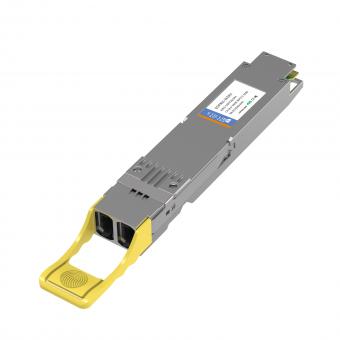
Transceptor óptico 800G OSFP 2×DR4 1310nm 500M MPO12 DDM Lee mas
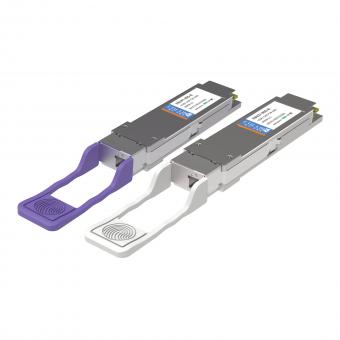
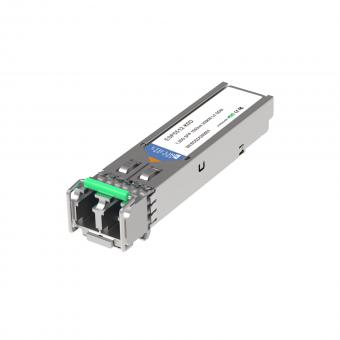
Transceptor óptico LC SFP de 1,25 G, 1550 nm y 200 km Lee mas
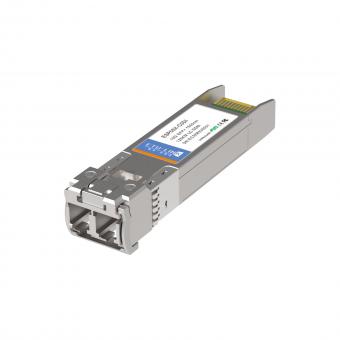

Transceptor óptico LC de 100G QSFP28 LR con sonda Lambda única de 10KM Lee mas
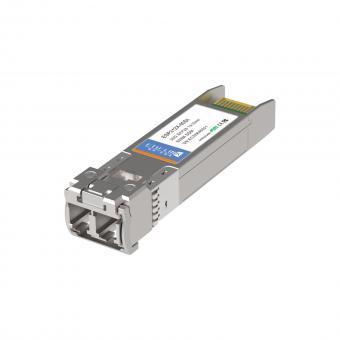
Transceptor óptico de 25G SFP28 ZR 1310nm los 80KM LC Lee mas
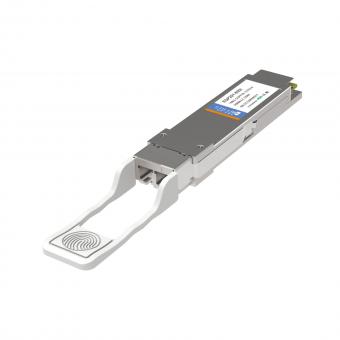
Transceptor óptico de generación II de 100G QSFP28 ZR4 80KM LC Lee mas
Para consultas sobre nuestros productos o lista de precios, déjenoslo y nos pondremos en contacto dentro de las 24 horas.


 13th Floor, Building 6, Honghualing Base, Nanshan Intelligent Manufacturing Base, Liuxian Avenue, Taoyuan Street, Xili, Nanshan District, Shenzhen, China
© Derechos de autor: 2026 ETU-Link Technology CO ., LTD Reservados todos los derechos.

Soporta red IPv6


