

 español



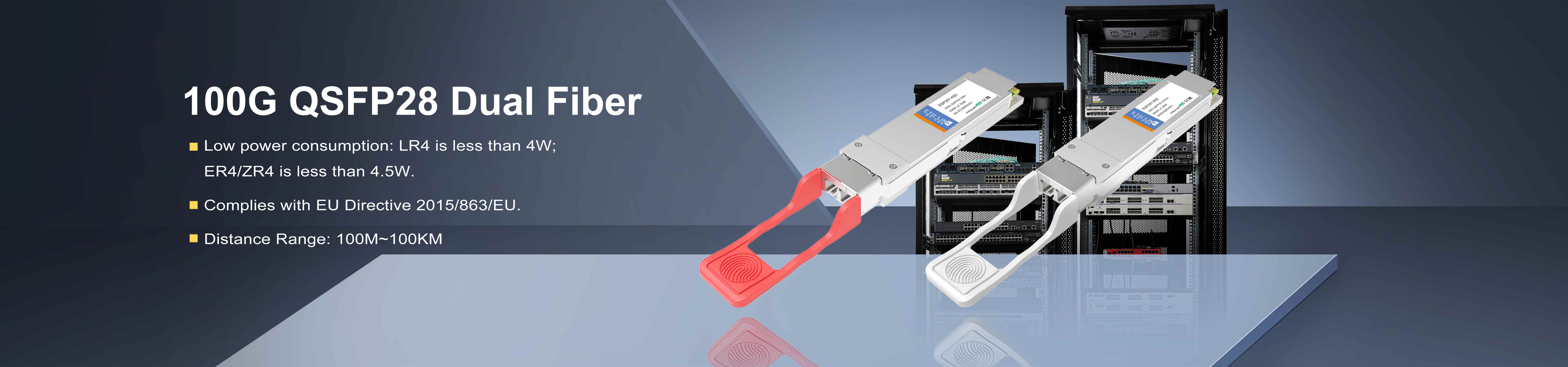
Ventajas y escenario de aplicación del producto de comunicación óptica ETU-LINK
Los módulos ópticos, como componentes esenciales de los sistemas de comunicación óptica, son esencialmente "traductores de señales" que conectan el mundo digital. En el transmisor, convierten las señales eléctricas en señales ópticas para su transmisión a través de fibra óptica, y en el receptor, se convierten de nuevo en señales eléctricas, lo que permite una interacción fluida de datos entre dispositivos. Desde velocidades que van de 1 Gbps a 1,6 Tbps, desde componentes discretos hasta encapsulados altamente integrados, el desarrollo de la industria de módulos ópticos ha estado en constante sintonía con la economía digital. ETU-LINK Optical Communication, con su precisa estrategia de producto y sus excepcionales ventajas tecnológicas, se ha consolidado en diversos escenarios de aplicación.
I. Componentes principales y lógica de trabajo
La funcionalidad de un módulo óptico depende de los esfuerzos coordinados de los chips ópticos y eléctricos; ambos tienen funciones distintas y son indispensables.
(1) Óptico do caderas Como núcleo, están integrados en los componentes ópticos del transmisor (TOSA) y del receptor (ROSA), que contienen componentes centrales como láseres y detectores, y son responsables de la conversión electroóptica/fotoeléctrica. Actualmente, los chips ópticos de gama baja por debajo de 10 Gb/s se fabrican en el país, mientras que los productos de gama alta de 25 Gb/s y superiores aún dependen de las importaciones.
(2) Electrónico do caderas Como "cerebro", incluyen chips controladores, chips DSP, etc., y son responsables de tareas como la amplificación de señales y la codificación/decodificación. Los chips DSP de alta gama han estado monopolizados durante mucho tiempo por empresas extranjeras como Broadcom y Marvell.
El módulo óptico de alta velocidad opera en bucle cerrado: la señal eléctrica de transmisión es codificada y compensada por el chip DSP, luego amplificada por el chip controlador y utilizada para activar el chip óptico y convertirla en una señal óptica; la señal óptica de recepción es convertida en una señal eléctrica débil por el detector, amplificada y restaurada a una señal eléctrica estándar por el chip DSP. El chip DSP elimina las interferencias de transmisión mediante algoritmos, lo cual es la principal garantía de la calidad de la señal a altas velocidades.
El valor fundamental de los módulos ópticos reside en resolver los problemas de las señales eléctricas, que presentan un alcance y una velocidad limitados. Las señales ópticas experimentan una pérdida de transmisión extremadamente baja y una alta velocidad en fibras ópticas, con un ancho de banda muy superior al de los cables. Sin módulos ópticos, las enormes cantidades de datos necesarias para entrenar grandes modelos de IA no pueden intercambiarse entre servidores. Actualmente, las velocidades habituales oscilan entre 10 Gbps y 1,6 Tbps, y se utilizan ampliamente en escenarios clave como centros de datos, redes de telecomunicaciones y estaciones base 5G.
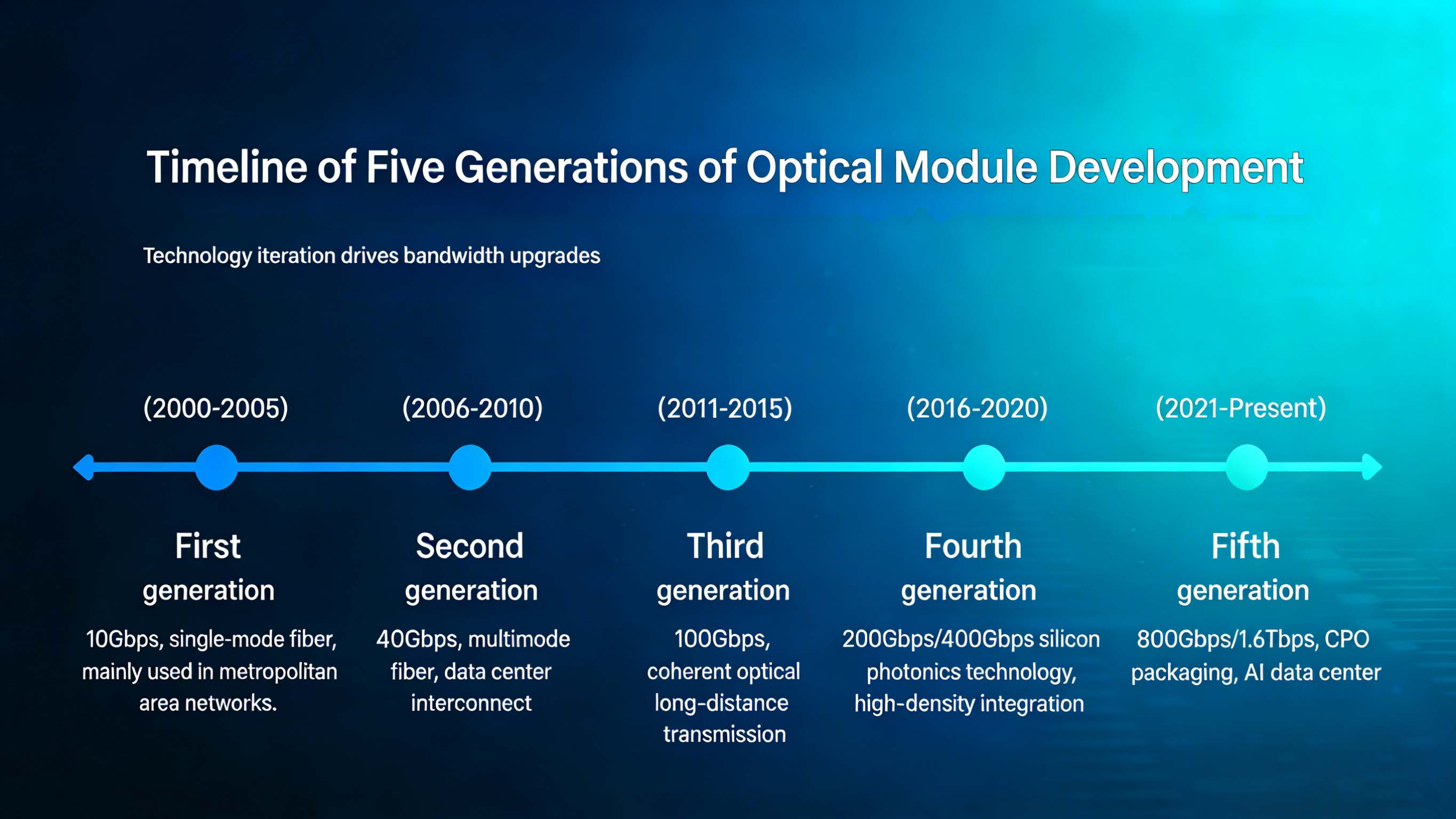
II. Cinco etapas de la evolución de la industria de módulos ópticos
1. El período de la fundación tecnológica (1960-1994)
Los avances en la tecnología láser (1960) y la teoría de la comunicación por fibra óptica (1966) sentaron las bases. En aquel entonces, los componentes eran discretos, no existía una forma estandarizada, la velocidad era inferior a 1 Gbps y solo se utilizaba en unas pocas redes troncales. La disipación térmica dependía de una simple conducción en la carcasa.
2. Período de normalización (1995-2000)
En 1995, el primer módulo óptico estandarizado de 1 Gbps entró en producción en masa, y el estándar GBIC permitió la sustitución en caliente, convirtiendo los módulos ópticos en productos independientes. En 1999, el módulo de encapsulado 1X9 optimizó la compatibilidad, con un consumo de energía de 1-2 W por módulo, y comenzó a surgir el problema de la resistencia térmica de contacto.
3. El período de miniaturización acelerada (2001-2010)
La adopción generalizada de internet impulsó una transición hacia la alta velocidad y la miniaturización. En 2001 se lanzó un módulo de 10 Gbps, y en 2009, el encapsulado SFP+ alcanzó velocidades de 10 Gbps en un encapsulado GBIC de 1/3 del tamaño. El consumo de energía de un solo módulo era de 2-3 W, y la reducción de tamaño provocó la acumulación de calor, convirtiendo la conducción térmica en la principal vía de disipación.
4. Periodo de rápido desarrollo (2011-2020)
La computación en la nube está impulsando velocidades hacia los 100 Gbps, convirtiendo el encapsulado QSFP en la norma (QSFP28 para 100 Gbps y QSFP56 para 200 Gbps). El consumo de energía de un solo módulo es de 3,5 a 6 W, y la tecnología de modulación PAM4 aumenta los puntos de generación de calor, lo que obliga a una temperatura de la carcasa del láser ≤70 ℃.
5. La era de la integración ultrarrápida (2021-presente)
La demanda de potencia de procesamiento de IA ha impulsado velocidades de hasta 400G, 800G y 1.6T, reduciendo el ciclo de iteración a 2 años. La entrega a gran escala de 800G se realizará en 2023, y la de 1.6T comenzará su comercialización en 2025. El encapsulado QSFP-DD y OSFP se ha generalizado, con módulos de 800G que consumen entre 15 y 30 W de energía. Han surgido nuevas tecnologías de ahorro de energía, como la fotónica de silicio, LPO y CPO, para satisfacer esta demanda.
III. ETU-LINK Comunicación óptica Ventajas del producto y escenarios de implementación
En el mercado global de módulos ópticos, las empresas chinas ocupan siete de los diez primeros puestos gracias a sus ventajas de empaquetado. ETU-LINK Optical Communication, como actor clave, consolida su competitividad mediante la cobertura integral de escenarios y el empoderamiento de alto rendimiento.
Ventajas principales del producto
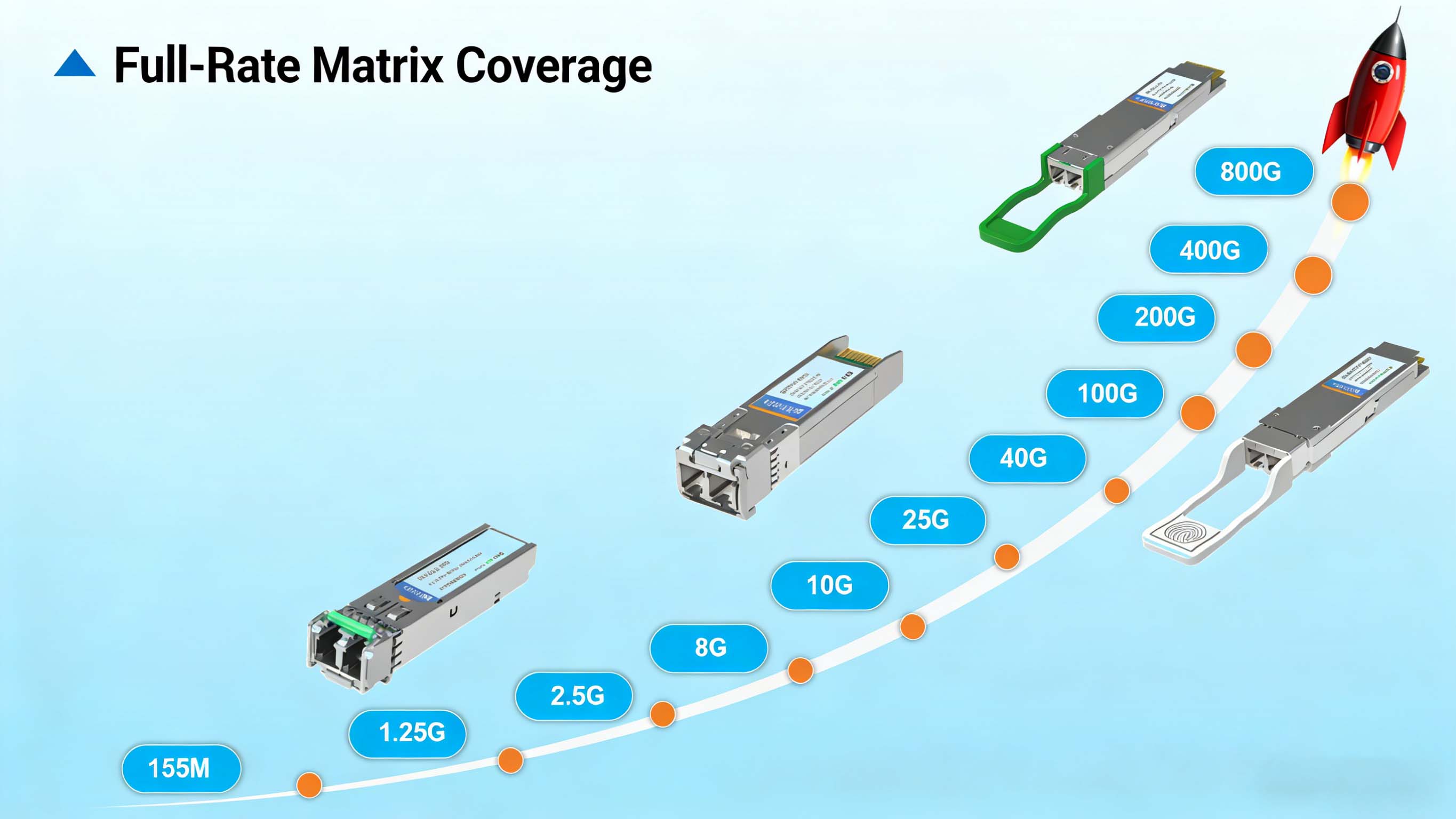
(1) Cobertura de matriz de tasa completa Los productos cubren velocidades comunes como 10G, 25G, 40G, 100G y 400G, conformando una cadena completa de productos que abarca desde módulos 10G BASE-T y 25G SFP28 adaptados para redes empresariales hasta productos de alta velocidad 100G SR/LR y 400G DR4 para centros de datos. Entre ellos, las series 40G ER/ZR y 100G LR/SR han sido sometidas a una larga verificación de mercado, con una estabilidad de transmisión de señal del 99,99% y un rendimiento superior al 98%, ofreciendo una relación calidad-precio significativamente mejor que la de productos similares del extranjero.
(2) Adaptación de tecnología personalizada : 1) El rendimiento del producto está optimizado para diferentes requisitos de escenarios. Los módulos de grado industrial admiten un amplio rango de temperatura de funcionamiento de -40 °C a 85 °C, lo que los hace ideales para estaciones base de telecomunicaciones exteriores y entornos de control industrial. 2) El consumo de energía de los módulos de la serie de bajo consumo se reduce entre un 15 % y un 20 % en comparación con el promedio de la industria, lo que se alinea con las políticas de centros de datos ecológicos. 3) Los productos de transmisión de larga distancia (como 40G ZR y 100G ER) mejoran la distancia de transmisión en un 30 % en comparación con los productos estándar gracias a la tecnología optimizada de acoplamiento de chip óptico, lo que satisface las necesidades de interconexión de datos interregional.
(3) Alta compatibilidad y entrega garantizada. Los productos cumplen estrictamente con los estándares IEEE y MSA, lo que garantiza una compatibilidad perfecta con fabricantes de equipos convencionales como Huawei, H3C y Cisco. Gracias a las líneas de producción flexibles, se puede responder rápidamente a las necesidades personalizadas, acortando los plazos de entrega estándar de productos a 7-10 días y enviando los pedidos urgentes en 48 horas, lo que satisface las necesidades de los clientes para una rápida implementación de sus proyectos.
Llave A aplicación S escenarios
A. Interconexión de centros de datos Los módulos SR/LR de 100G y DR4 de 400G, con su baja latencia (≤300 ns) y alto ancho de banda, se utilizan para interconectar clústeres de servidores de proveedores de servicios en la nube y satisfacer las necesidades de transmisión de datos del análisis de big data y el entrenamiento de modelos de IA. Ya han prestado servicio a numerosas pymes de servicios en la nube en China.
B. Red troncal de telecomunicaciones y estaciones base 5G Los módulos 40G ER/ZR y 100G ER están adaptados a los requisitos de transmisión de larga distancia y se han convertido en la opción principal para que los operadores de telecomunicaciones regionales actualicen sus redes troncales; los módulos 25G SFP28 se utilizan ampliamente en los enlaces fronthaul de las estaciones base 5G para garantizar una interacción de datos eficiente entre las estaciones base y la red central.
DO. Redes empresariales e industriales Los módulos de baja velocidad de 10G y 25G ofrecen alta estabilidad y rentabilidad, cubriendo escenarios como redes de campus empresariales e internet industrial para fábricas inteligentes, ayudando a los clientes a lograr actualizaciones de red y la transformación digital. Nuestra empresa se ha expandido a más de 100 países y regiones en todo el mundo.
IV. Tendencias de la industria y perspectivas de desarrollo
La industria de módulos ópticos se encuentra actualmente en una revolución tecnológica orientada a la alta velocidad y el bajo consumo de energía. La gradual implementación de nuevas tecnologías como la fotónica de silicio, LPO y CPO ha impulsado un rápido aumento de la demanda de módulos de 1.6T. ETU-LINK Optical Communication ha iniciado la investigación preliminar sobre módulos de 1.6T y colabora estrechamente con fabricantes nacionales de chips ópticos para impulsar las pruebas de sustitución nacional de chips ópticos de alta gama de 25G y 50G, reduciendo así la dependencia de materiales de núcleo importados.
En la ola global de digitalización, la importancia de los módulos ópticos como enlace de transmisión de potencia informática cobra cada vez mayor relevancia. ETU-LINK Optical Communication, con su cartera de productos para escenarios completos, ventajas tecnológicas personalizadas y capacidades de entrega eficientes, se ha consolidado en el mercado de redes empresariales, operaciones de telecomunicaciones y centros de datos. De cara al futuro, con la aceleración de la sustitución nacional y los avances en la tecnología de módulos de ultraalta velocidad, la compañía seguirá consolidando su presencia en nichos de mercado, ofreciendo a sus clientes globales soluciones de comunicación óptica de alta calidad y contribuyendo al desarrollo de alta calidad de la economía digital.
Categorías
nuevo blog
Etiquetas
nuevos productos
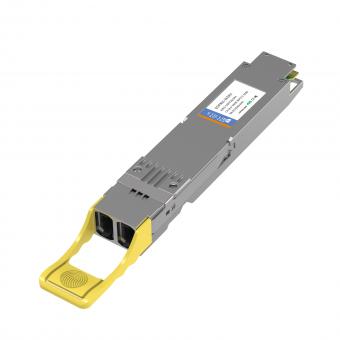
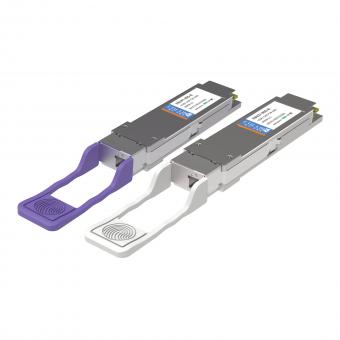
Transceptor óptico 800G OSFP 2×DR4 1310nm 500M MPO12 DDM Lee mas
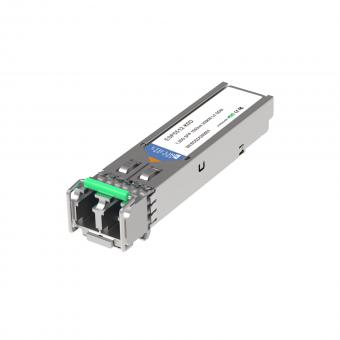
Transceptor óptico LC SFP de 1,25 G, 1550 nm y 200 km Lee mas
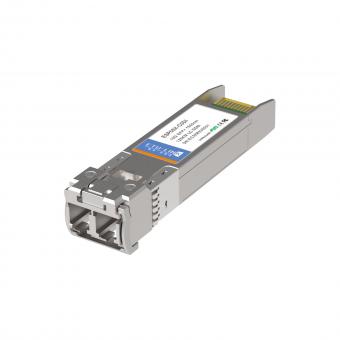

Transceptor óptico LC de 100G QSFP28 LR con sonda Lambda única de 10KM Lee mas
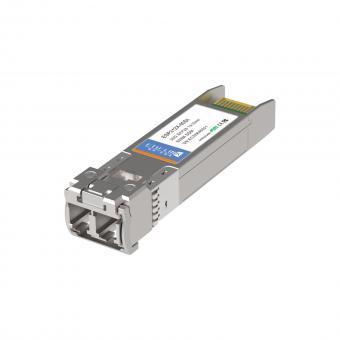
Transceptor óptico de 25G SFP28 ZR 1310nm los 80KM LC Lee mas
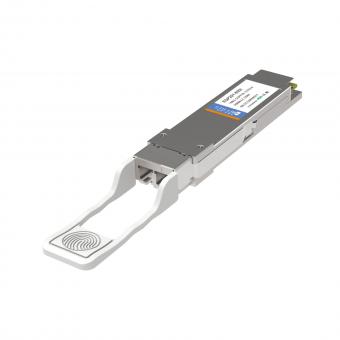
Transceptor óptico de generación II de 100G QSFP28 ZR4 80KM LC Lee mas
Para consultas sobre nuestros productos o lista de precios, déjenoslo y nos pondremos en contacto dentro de las 24 horas.


 13th Floor, Building 6, Honghualing Base, Nanshan Intelligent Manufacturing Base, Liuxian Avenue, Taoyuan Street, Xili, Nanshan District, Shenzhen, China
© Derechos de autor: 2026 ETU-Link Technology CO ., LTD Reservados todos los derechos.

Soporta red IPv6


