

 español




The Largest M&A Deal in Optical Communications: Who Will Reshape the AI Optical Interconnect Landscape?
On November 2nd, US time, Marvell officially announced its all-stock acquisition of Lumentum, valuing the company at $115 billion, making it the largest M&A deal in the history of optical communications and AI optical interconnects. The news immediately triggered a negative reaction in the secondary market, with both companies' stock prices plummeting, putting pressure on sentiment across the global optical module supply chain. However, looking beyond short-term fluctuations, this transaction is not simply a capacity acquisition, but rather a landmark strategic bet on the optoelectronic integration approach to address the bandwidth bottlenecks in AI computing power.
I.Typical Case of Upstream-Downstream Vertical Integration
Unlike previous horizontal integrations between optical module manufacturers, this transaction is a typical vertical merger between upstream and downstream companies: Marvell, with its high-speed DSPs, switching chips, silicon photonics, and electrical interconnect solutions, is the core electrical chip supplier for AI optical modules; Lumentum, possessing scarce indium phosphide technology, high-speed EML lasers, optical transceivers, and OCS optical switching capabilities, is one of the most important light source suppliers for leading global optical module manufacturers. After the merger, the new company will establish a complete signal chain from electrical signal processing and light source transmission to optical path reception, enabling deep collaborative design of electrical and optical chips, aiming to rival Broadcom and create a competitive landscape of two global optoelectronic integration giants.
II.AI Cluster Transformation Fosters a New Paradigm for Optoelectronic Co-design
The underlying logic of the merger is rooted in the fundamental transformation of AI cluster architecture. As large-scale model clusters continue to expand, the power consumption, attenuation, and heat dissipation limitations of copper interconnects are no longer sufficient to support the demands of next-generation ultra-high-speed interconnects. Optical interconnects are no longer a supplementary solution for long-distance transmission, but a necessity across the entire link—within chip packages, within racks, and between clusters. The industry paradigm is shifting from piecemeal solutions using discrete components to a co-design model where optoelectronics are jointly defined and verified synchronously. The merger between Marvell and Lumentum aims to pre-optimize DSP algorithms, laser spectra, and packaging structures collaboratively, shortening new product iteration cycles, reducing overall power consumption, and seizing high-growth new scenarios such as scale-in and scale-up. Both parties estimate that the addressable market space after the merger will reach $550 billion, with annualized cost synergies exceeding $1 billion, and non-GAAP EPS will increase immediately in the first year after the transaction.
III.Supply Chain Restructuring: Domestic Manufacturers Face New Challenges
Market concerns focus on the reshaping of the supply chain landscape. Previously, DSPs and high-speed lasers were supplied by different vendors, allowing domestic optical module manufacturers to independently select components and compare prices from multiple sources. Once the deal is finalized, a single entity will control two core upstream materials. Coupled with Lumentum's own optical module brand, Cloud Light, leading domestic module manufacturers will face dual pressures: narrowing bargaining power for upstream core components, and competition from rivals with native optoelectronic synergy advantages. Adding to this the current tight capacity of high-speed lasers and order backlogs extending to 2029, the market worries that during periods of capacity shortage, resources will be prioritized for proprietary solutions, squeezing out third-party customers.
IV.Regulatory Cycle Allows for a Buffer Period; Opportunities Emerge for Domestic Players
However, the risks are not one-way; the lengthy regulatory cycle is the most important buffer. The transaction is expected to be completed in the first half of 2028 and will require antitrust reviews in multiple countries. This is a typical case of vertical integration review, and the core focus of regulators is whether there are practices such as exclusive supply, bundled sales, or squeezing out the survival space of independent module manufacturers. Referring to similar major semiconductor mergers and acquisitions in the past, the final plan will most likely include a fair supply commitment, limiting the risk of extreme supply disruptions. At the same time, the demand for supply chain security will also force cloud vendors and optical module manufacturers to actively diversify their suppliers, driving other overseas optical device manufacturers such as Coherent and domestic optoelectronic chip companies to accelerate their adoption, thus opening an accelerated verification window for domestic optical chips and high-speed DSPs.
V.Long-Term Industry Challenge: Moving Beyond Assembly to Compete on Optoelectronic Synerg
From a longer-term perspective, this merger and acquisition has highlighted two critical challenges for domestic optical communications industry. In the short term, domestic module manufacturers need to continuously diversify their supply chains and reduce reliance on a single upstream supplier. In the medium to long term, the limitations of relying solely on assembly and manufacturing are becoming increasingly apparent; optoelectronic collaborative design capabilities will be the next generation of competitive barriers. Competition in the optical module industry is shifting from assembly process competition to competition in underlying technologies involving upstream optical chips, electrical chips, and packaging collaboration.
This multi-billion dollar acquisition is not an ending, but a signal of a turning point in the industry: the era of full-stack AI optical interconnection has begun, and the value center of the industry chain is shifting to the core links of optoelectronic integration.
The AI computing power, optical communication, and optical module industries are evolving rapidly. We will continue to track the antitrust progress of this acquisition, the strategies of major overseas manufacturers, and breakthroughs in domestically produced optical chips. Please click to follow us for in-depth industry analysis.
What are your thoughts on Marvell and Lumentum's multi-billion dollar acquisition? Will it accelerate the process of domestic self-sufficiency in optical chips? Feel free to share your opinions in the comments section.
Categorías
nuevo blog
Etiquetas
nuevos productos
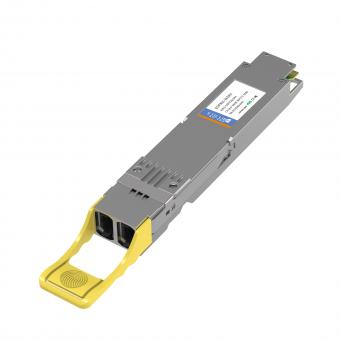
Transceptor óptico 800G OSFP 2×DR4 1310nm 500M MPO12 DDM Lee mas
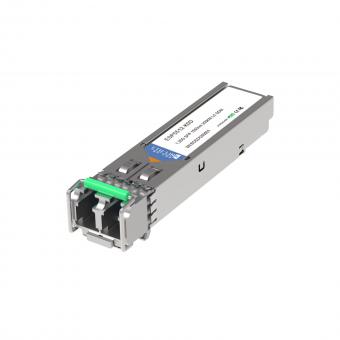
Transceptor óptico LC SFP de 1,25 G, 1550 nm y 200 km Lee mas
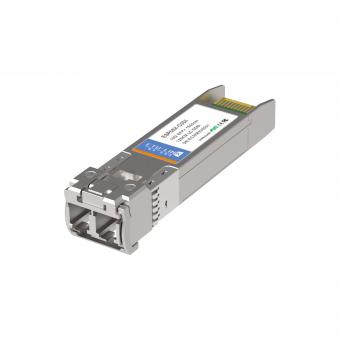

Transceptor óptico LC de 100G QSFP28 LR con sonda Lambda única de 10KM Lee mas
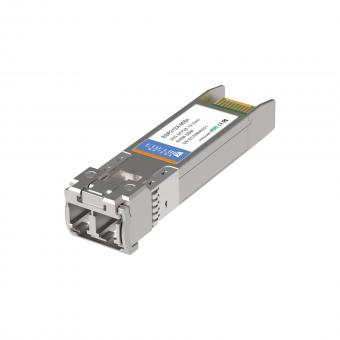
Transceptor óptico de 25G SFP28 ZR 1310nm los 80KM LC Lee mas
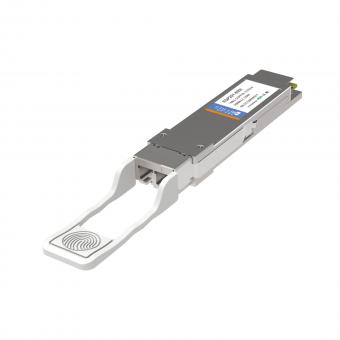
Transceptor óptico de generación II de 100G QSFP28 ZR4 80KM LC Lee mas
Para consultas sobre nuestros productos o lista de precios, déjenoslo y nos pondremos en contacto dentro de las 24 horas.


 13th Floor, Building 6, Honghualing Base, Nanshan Intelligent Manufacturing Base, Liuxian Avenue, Taoyuan Street, Xili, Nanshan District, Shenzhen, China
© Derechos de autor: 2026 ETU-Link Technology CO ., LTD Reservados todos los derechos.

Soporta red IPv6


