

 español




How to Choose 800G Optical Module Package: QSFP-DD or OSFP
AI large-scale model training and cloud computing data centers are undergoing a comprehensive upgrade from 400G to 800G. When discussing 800G optical modules, two mainstream packages are unavoidable: QSFP-DD (QDD for short) and OSFP . Many people think they are simply different in size, but in reality, their design philosophies, power consumption limits, compatibility, and applicable scenarios are completely different. Their cages and slots are not interchangeable and cannot be mixed . Choosing the wrong package directly impacts project costs and long-term expansion capabilities!
I. Packaging Design Philosophy and Differences in Underlying Technologies
1. QSFP-DD (Quad Small Form Factor Pluggable Double Density)
This upgraded version of the QSFP family adds electrical channels to the classic QSFP structure, achieving 8 channels of 100G PAM4, totaling 800G. Its core design goal is to inherit the QSFP ecosystem, enabling existing data centers to upgrade from 100G/400G to 800G at low cost . The QSFP-DD slot is backward compatible with QSFP28/QSFP56 modules, allowing for mixed operation of new and old equipment and reducing the cost of a one-time complete system replacement.
2. OSFP (Octal Small Form Factor Pluggable)
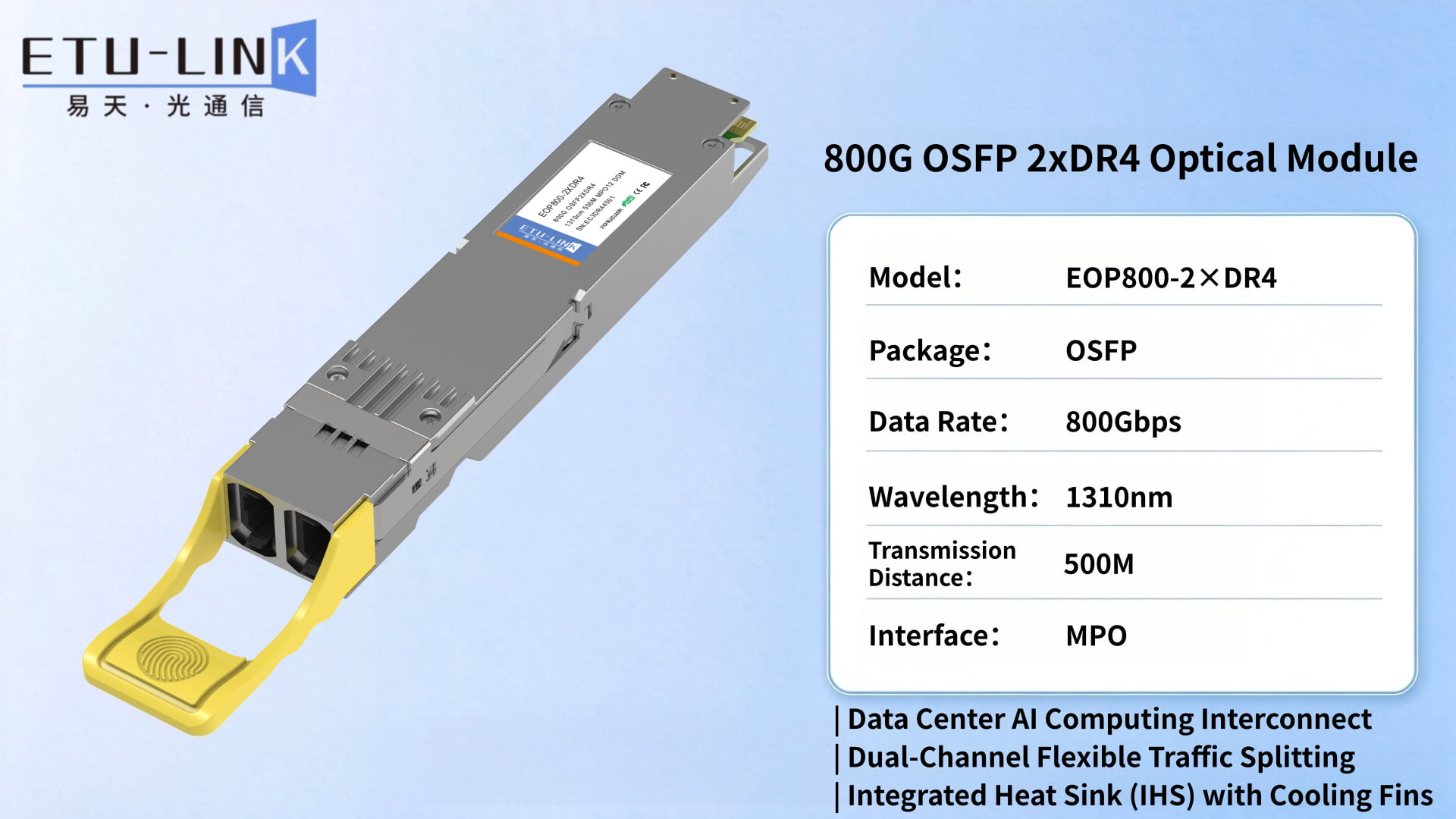
Featuring a native 8-channel new package, free from the burden of compatibility issues with older QSFP modules. With a larger housing, stronger power supply, and a larger heatsink, it was designed from the outset for high-power DSP modules and direct AI GPU connections, while also paving the way for 1.6T optical modules. The OSFP cage can only accommodate OSFP modules and is incompatible with older QSFP modules . Furthermore, OSFP modules come in two package types: IHS and RHS , which are also incompatible; careful consideration must be given to matching the device cage.
Important reminder: QSFP-DD and OSFP use different physical locking designs, and their mechanical interfaces are incompatible and cannot be mixed and matched. The switch slot can only use modules with the corresponding package type; they cannot be mixed. This is the first principle of selection, and many projects encounter problems here.
II. Analysis of Core Differences: Trade-offs Between Power Consumption, Density, and Compatibility
Many people only look at the size and appearance, but the real factors affecting the successful implementation of a project are these:
1. Compatibility
QSFP-DD: Backward compatible with QSFP28/QSFP56, the first choice for upgrading existing data centers, with almost no change to the original operation and maintenance and cabling system.
OSFP: Independent slot, not compatible with QSFP series. Prioritized for newly built computing clusters where reuse of old modules is not a concern.
2. Heat Dissipation and Power Consumption Limits (The Most Critical Metrics for AI Applications)
QSFP-DD limited by enclosure space, has a standard power consumption limit of approximately 20W , suitable for low-power modules like short-pitch SR8 and DR8. However, if long-pitch DSP modules like FR8/LR8/ZR8 are used, power consumption exceeds 16W, significantly increasing the risk of power derating due to high temperatures.
OSFP enclosures are wider and longer, with larger heat sinks and stronger power delivery capabilities, stably supporting 16~30W high-power DSP coherent modules. For GPU clusters operating at full load for extended periods and long-pitch DCI interconnects, ample heat dissipation margin is a core advantage, making it more suitable for both air-cooled and liquid-cooled server rooms.
3. Port Panel Density
QSFP-DD optical modules are narrower, allowing more 800G ports to be deployed on the same switch panel, offering a clear advantage for those seeking high port count and high-density leaf-spine networks.
OSFP optical modules are wider, requiring fewer ports in the same panel space, sacrificing density for stronger power supply and heat dissipation.
4. Iterative Evolution Path
QSFP-DD focuses on a smooth short-term iteration from 400G to 800G, with a mature supply chain and better mass production costs, but power consumption bottlenecks will become prominent when targeting 1.6T.
OSFP natively targets both 800G and 1.6T products, and leading AI vendors generally adopt this route for building new clusters, which is more friendly to long-term expansion.
5. Management Protocol: Both support the CMIS general management interface, and their monitoring, diagnostic, and digital diagnostic function systems are consistent, with no major differences at the network management level.
Ⅲ. Scenario-Based Selection Guide
1. Scenarios prioritizing QSFP-DD 800G
|
Model |
Package |
Description |
|
EQP800-VR8 |
QSFP-DD |
800G QSFP-DD VR8 850nm 30/50m(OM3/OM4) |
|
EQP800-SR8 |
QSFP-DD |
800G QSFP-DD SR8 850nm 60/100m(OM3/OM4) |
|
EQP800-DR8 |
QSFP-DD |
800G QSFP-DD DR8 1310nm 500m |
|
EQP800-2×DR4 |
QSFP-DD |
800G QSFP-DD 2×DR4 1310nm 500m |
|
EQP800-2×FR4 |
QSFP-DD |
800G QSFP-DD 2×FR4 CWDM4 2km |
|
EQP800-2×LR4 |
QSFP-DD |
800G QSFP-DD 2×LR4 CWDM4 10km |
Traditional cloud data centers and enterprise private clouds are upgrading existing switch data centers and hoping to reuse the original QSFP modules;
Short-range interconnects within data centers: 800G QSFP-DD SR8 optical modules, with low link loss;
The project's core requirements are: maximizing port density, budget sensitivity, and large-scale batch deployment.
The plan only covers the 800G generation and there are no plans to upgrade to 1.6T in the short term.
A word of caution: If your link is a long-distance single-mode FR8/LR8/ZR8 with built-in DSP, which has high power consumption, you should carefully evaluate the heat dissipation of the QSFP-DD. It is easy to cause high temperature alarms and performance degradation when under full load for a long time.
2. Prioritize OSFP 800G scenarios
Model
Package
Description
EOP800-VR8
OSFP
800G OSFP VR8 850nm 30/50m(OM3/OM4)
EOP800-SR8
OSFP
800G OSFP SR8 850nm 100m (OM5 multimode )
EOP800-DR8
OSFP
800G OSFP DR8 1310nm 500m (OS2 single-mode)
EOP800-2×DR4
OSFP
800G OSFP 2×DR4 1310nm 500m (OS2 single mode)
EOP800-2×FR4
OSFP
800G OSFP 2×FR4 CWDM4 2km
EOP800-2×LR4
OSFP
800G OSFP 2×LR4 C WDM 4 10km
AI high-computing clusters and GPU direct-connected networks require modules to operate under high load for extended periods, making heat dissipation a key bottleneck.
Requires 800G long-distance single-mode interconnect: FR8, LR8, ZR8 coherent modules, with power consumption exceeding 16W;
The newly built data center has no existing QSFP assets and is designed to support 800G from the outset, with 1.6T upgrade space reserved.
Liquid-cooled/high-power air-cooled cabinets require modules with sufficient thermal capacity to ensure stable operation throughout the year.
Disadvantages to note: Switches must be purchased as OSFP-specific models, older QSFP modules cannot be reused, initial hardware procurement costs are higher, and the number of panel ports is fewer.
IV. Project Implementation Pitfalls Checklist (Essential Reading for Procurement/Solution Design)
1. Determine the switch enclosure first, then select the modules: The package is determined by the switch's hardware slots; do not select modules first and then look for the switch.
2. Evaluate power consumption and link distance together: For short-range multimode low-power modules, QSFP-DD is sufficient; for long-range single-mode DSPs, OSFP is preferred.
3. The heat dissipation capacity of the data center cannot be ignored: In ordinary air-cooled data centers, a large number of high-power modules are deployed in a concentrated manner, and QSFP-DD is very prone to hot spots.
4. Long-term expansion plan: Whether the project is deployed at 800G all at once or upgraded to 1.6T within 2-3 years directly affects the packaging route.
5. Cabling system: Both types of packaging modules support MPO fiber optic cables. The fiber optic link itself does not need to be modified; the difference lies only in the module itself.
V. Conclusion: There Is No Absolute “Better”—Only the Most Appropriate Choice
QSFP-DD and OSFP are not substitutes, but rather two parallel paths:
1. QSFP-DD is a robust upgrade option: it is compatible with existing infrastructure, offers high density, and is cost-effective, making it suitable for short-distance interconnection of traditional data centers.
2. OSFP is future-oriented: it has high heat dissipation and high power supply, can withstand long-term full load of AI computing clusters, is compatible with long-pitch DSP, and has reserved space for 1.6T.
The core of the selection is not to blindly choose the popular OSFP in the AI circle, nor to simply choose QSFP-DD to save money, but to make a comprehensive evaluation based on the current situation of the data center, transmission distance, module power consumption, and long-term expansion goals.
Follow us for continuous updates on high-speed optical modules and data center interconnects, and get the latest industry technology and selection guides for 400G/800G/1.6T.
When choosing an 800G optical module, do you prioritize port compatibility or module performance? Feel free to leave a comment below to share your thoughts.
Categorías
nuevo blog
Etiquetas
nuevos productos
Transceptor óptico 800G OSFP 2×DR4 1310nm 500M MPO12 DDM Lee mas
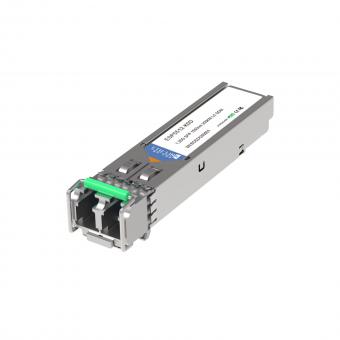
Transceptor óptico LC SFP de 1,25 G, 1550 nm y 200 km Lee mas
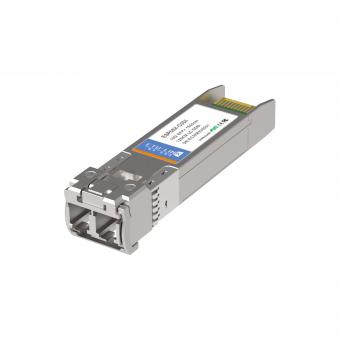

Transceptor óptico LC de 100G QSFP28 LR con sonda Lambda única de 10KM Lee mas
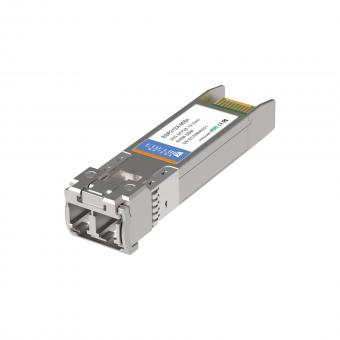
Transceptor óptico de 25G SFP28 ZR 1310nm los 80KM LC Lee mas
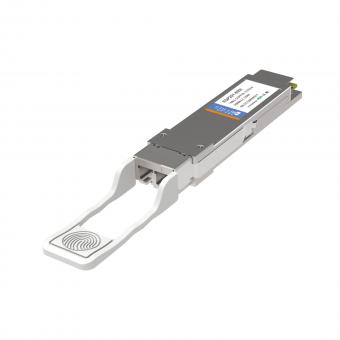
Transceptor óptico de generación II de 100G QSFP28 ZR4 80KM LC Lee mas
Para consultas sobre nuestros productos o lista de precios, déjenoslo y nos pondremos en contacto dentro de las 24 horas.


 13th Floor, Building 6, Honghualing Base, Nanshan Intelligent Manufacturing Base, Liuxian Avenue, Taoyuan Street, Xili, Nanshan District, Shenzhen, China
© Derechos de autor: 2026 ETU-Link Technology CO ., LTD Reservados todos los derechos.

Soporta red IPv6


