

 español



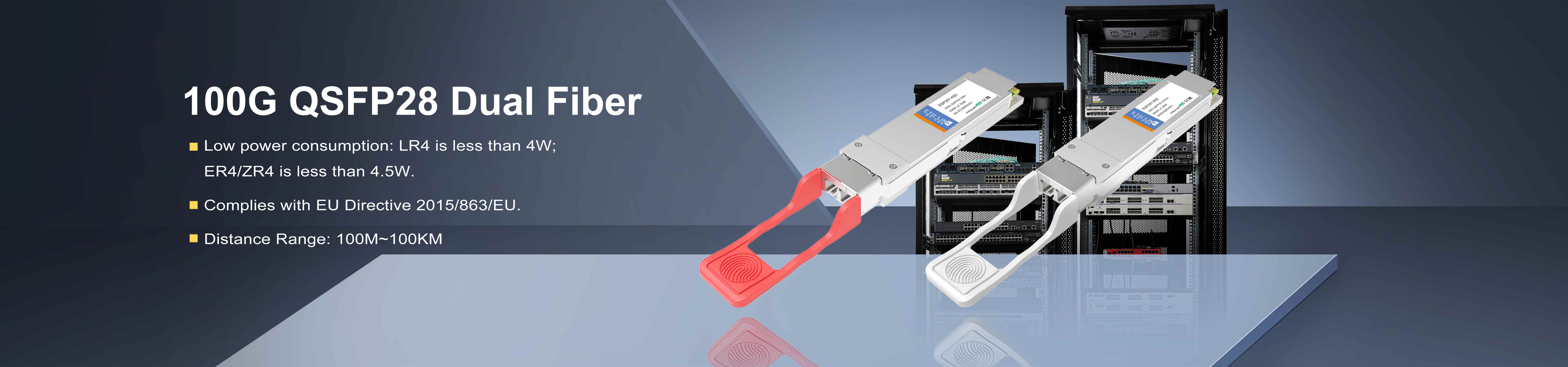
100G QSFP28 Optical Module Features and Selection Analysis
Smooth video streaming, instant cloud file transfers, and 24/7 high-speed operation of big data centers all rely on an unassuming "network hero"—the 100G QSFP28 optical module. Many people only know about its fast network speed, but they don't understand its true capabilities, applicable scenarios, or the most common pitfalls in choosing it.
Today, we 'll use super easy-to-understand, practical information to summarize the core knowledge points of the 100G QSFP28 optical module, helping you solve selection problems and avoid networking pitfalls!
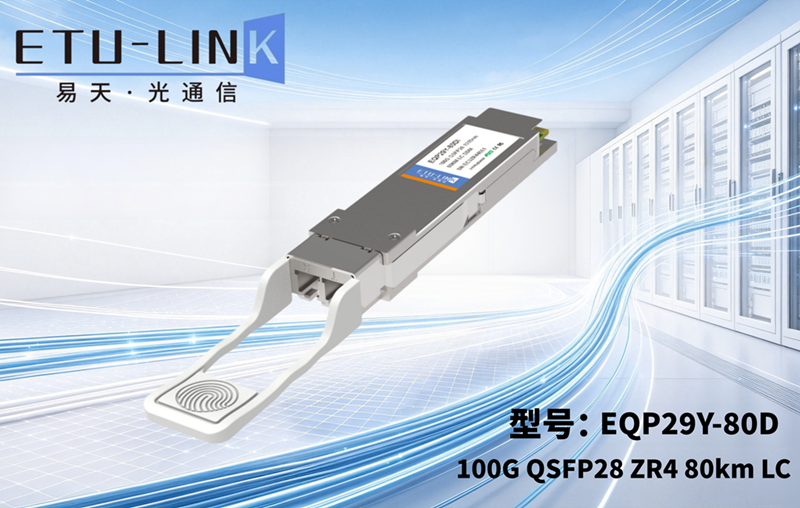
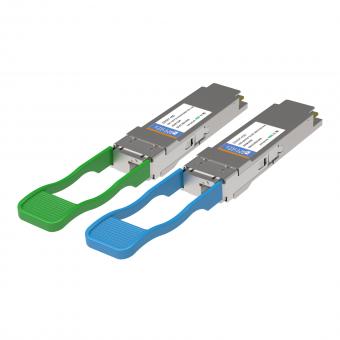
The mainstream 100G QSFP28 optical module features small size and low power consumption, includes NRZ and PAM4 modulation modes, and is compatible with 850nm and 1310nm bands to achieve short-distance to medium-to-long-distance transmission, making it suitable for various data center network deployments.
| Reference Model | Type | Wavelength | Fiber Patch Cord | Distance | Connector | Applicable Scenarios |
| EQP85Y-01D | 100G QSFP28 SR4 | 850nm | Multimode OM3/OM4 | 70~100m | MPO | High-speed stacking of data centers and short-distance interconnection of servers |
| EQP31Y-05D | 100G QSFP28 DR1 | 1310nm | Single-mode OS2 | 500m | LC | Horizontal cabling inside large data centers |
| EQP27Y-10D | 100G QSFP28 CWDM4 | 1270~1330nm | Single-mode OS2 | 2~10km | LC | Park building and metropolitan area access layer networking |
| EQP31Y-2D | 100G QSFP28 FR1 | 1310nm | Single-mode OS2 | 2km | LC | Point-to-point interconnection between nearby stations within the same city |
| EQP29Y-10D | 100G QSFP28 LR4 | 1310nm | Single-mode OS2 | 10~20km | LC | Metropolitan area backbone and government/enterprise dedicated line cross-site transmission |
| EQP31Y-10D | 100G QSFP28 LR1 | 1310nm | Single-mode OS2 | 10km | LC | Economy-oriented, simplified urban express line |
| EQPDxxY-10D | 100G QSFP28 O-Band DWDM | 1295.56 ~1312.58nm | Single-mode OS2 | 10km | LC | Operator wavelength division multiplexing and co-fiber capacity expansion |
| EQP29Y-40D | 100G QSFP28 ER4 | 1310nm | Single-mode OS2 | 40km | LC | Cross-county backbone and outdoor medium-to-long-distance dedicated lines |
| EQP31Y-40D | 100G QSFP28 ER1 | 1310nm | Single-mode OS2 | 30~40km | LC | Suburban cross-regional cabling without repeaters |
| EQP29Y-80D | 100G QSFP28 ZR4 | 1310nm | Single-mode OS2 | 80km | LC | Remote base stations, long-distance backbone without relays |
| EQP29Y-A0D | 100G QSFP28 eZR4 | 1310nm | Single-mode OS2 | 100km | LC | Cross-provincial ultra-long-distance wide-area backbone transmission |
| EQP89Y-01D | 100G QSFP28 SWDM4 | 850nm | Multimode OM4 | 100m | LC | LC interface high-density data center short-distance cabling |
1)Selecting by Fiber Type: Multimode OM3/OM4 patch cords are compatible with SR4 and SWDM4 and are only used for short distances within 100 meters; Single-mode OS2 patch cords are compatible with all other single-mode numbers and meet the requirements for long-distance transmission over kilometers.
2)Selecting by Connector Type: MPO interface SR4 is suitable for large-scale stacking in data centers; conventional LC interface has strong versatility and is suitable for all modules except SR4, and is compatible with the vast majority of switch devices.
3)Selecting by Network Layer: CWDM4 and LR1 are selected for the access layer to meet the basic networking requirements; LR4 and ER4 are used for the aggregation layer to carry backbone services; and ZR4 and eZR4 are used in conjunction with the core backbone network to achieve ultra-long-distance cross-province transmission.
4)Selecting Models Based on Capacity Expansion Needs: Ordinary direct-modulation modules offer high cost-effectiveness and are suitable for fixed links; O-Band DWDM wavelength division multiplexing modules support multi-wavelength multiplexing and are suitable for scenarios with limited fiber core resources and future expansion needs.
Categorías
nuevo blog
Etiquetas
nuevos productos
Transceptor óptico 800G OSFP 2×DR4 1310nm 500M MPO12 DDM Lee mas
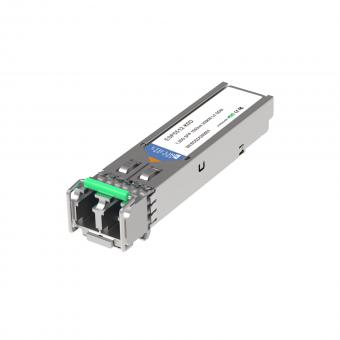
Transceptor óptico LC SFP de 1,25 G, 1550 nm y 200 km Lee mas
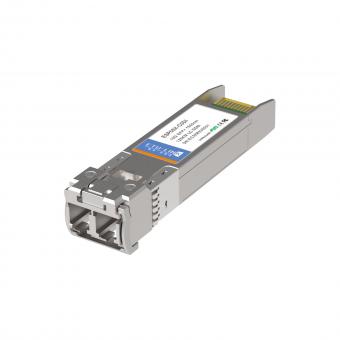

Transceptor óptico LC de 100G QSFP28 LR con sonda Lambda única de 10KM Lee mas
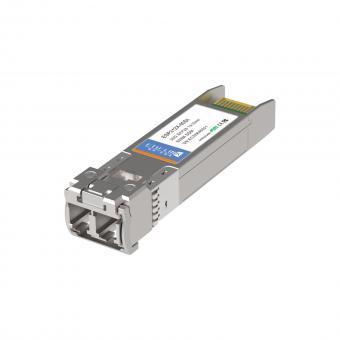
Transceptor óptico de 25G SFP28 ZR 1310nm los 80KM LC Lee mas
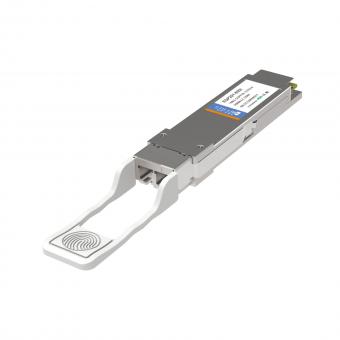
Transceptor óptico de generación II de 100G QSFP28 ZR4 80KM LC Lee mas
Para consultas sobre nuestros productos o lista de precios, déjenoslo y nos pondremos en contacto dentro de las 24 horas.


 13th Floor, Building 6, Honghualing Base, Nanshan Intelligent Manufacturing Base, Liuxian Avenue, Taoyuan Street, Xili, Nanshan District, Shenzhen, China
© Derechos de autor: 2026 ETU-Link Technology CO ., LTD Reservados todos los derechos.

Soporta red IPv6


