

 español




What Product Certifications Are Required for Optical Modules?
Introduction: When selecting components for data center, 5G communication, and enterprise networking projects, many procurement and engineering personnel focus on the following: Does the optical module have formal certification? Can it be exported overseas? Is it stable for long-term, large-scale use?
As a core component for photoelectric conversion, the certification of optical modules is not just a simple label, but a hard-core credential for product safety, environmental protection, and performance compliance.
As a manufacturer with over a decade of experience in optical communications, ETU-LINK's full range of optical module products has completed multiple international product certifications and three major management system certifications, covering the access requirements of projects both domestically and internationally, delivering reliable optical communication devices to customers worldwide!
Ⅰ. Product Access Certification | Passport to Global Market
1. CE Certification (EU Market Access)
CE is the mandatory safety mark of the European Union. Having the CE mark means that the manufacturer declares that the product meets the EU's safety, electromagnetic compatibility, laser safety, and environmental protection regulations, and can be circulated in the EU/EEA. ETU-LINK optical modules have passed laser safety testing and EMC electromagnetic compatibility testing (emission interference EMI + anti-interference EMS), meet EU standards, and can directly enter the European market. It is an essential qualification for overseas project bidding and export trade.
2. RoHS Certification (Restriction of Hazardous Substances)
RoHS, or RoHS, restricts the use of hazardous substances such as lead, mercury, and cadmium in electronic and electrical products. It is a mandatory compliance requirement for electronic and electrical products exported to the European Union (under the CE certification category). ETU-LINK rigorously screens all raw materials for its optical modules, controlling the entire process from component selection to finished product assembly. These materials are free of excessive hazardous substances, ensuring environmental friendliness and compatibility with domestic and international green data center and government/enterprise environmental protection projects.
3. FCC Certification (North American EMC)
The FCC (Federal Communications Commission) provides electromagnetic compatibility (EMC) certification, regulating electromagnetic radiation from electronic products. Data centers have a large number of densely deployed optical modules; excessive EMC can easily affect the stable operation of switches and servers. The FCC SDoC certification, through conducting interference (CE) and radiated interference (RE), proves that ETU-LINK Optical Communication's optical module radiation levels meet North American standards, ensuring stable and collaborative operation of data center equipment and meeting the procurement requirements of North American customers.
4. TUV Certification (Authoritative Third-Party Safety Testing)
TUV is a leading German third-party safety testing and certification agency, encompassing various testing and safety certifications for high-quality products exported to Europe and the global market . It focuses on rigorous testing of laser safety, electrical reliability, and long-term stability. Since optical modules contain built-in lasers, laser safety is paramount. TUV testing verifies that ETU-LINK optical modules meet photoelectric performance and laser safety standards under different temperature conditions, a significant advantage for high-end projects and major clients!
Ⅱ. Certification of Three Major Management Systems | Controlling Production Quality at the Source
Product certification assesses finished product performance, while system certification examines the entire factory management process; the two complement each other. ETU-LINK has passed ISO9001, ISO14001, and ISO45001 triple system certifications in one go, establishing a complete production management foundation.
1) ISO 9001 Quality Management System
Standardized control is implemented throughout the entire process, from incoming material inspection, production assembly, aging testing, finished product testing, to outbound shipment. Each batch of optical modules follows a unified quality control process, minimizing batch variations and ensuring consistency in mass production.
2) ISO 14001 Environmental Management System
Standardize factory production, waste disposal, and energy management; establish a sustainable environmental management mechanism; implement environmental protection requirements in the production and manufacturing process; and achieve green production.
3) ISO 45001 Occupational Health and Safety Management System
To ensure the occupational health and safety of workshop workers, standardize production line operations and equipment maintenance, stabilize the production team, reduce human risks in the production process, and ensure stable delivery.
Ⅲ. Why is optical module certification important when selecting a project?
Many customers easily overlook the fact that optical modules without the corresponding certification cannot be exported, and they also cannot be shortlisted for bidding projects in domestic government and enterprise data centers.
Lack of safety certification: Potential risks exist for laser safety and circuitry, and there is a risk of malfunction during long-term operation in the computer room;
Without RoHS compliance: Some projects could not be inspected and approved.
Lack of system certification: This indicates that the factory lacks standardized management and control, resulting in large fluctuations in the quality of batch products and high after-sales risks.
ETU-LINK offers comprehensive certifications, from individual product safety testing to the establishment of a complete factory system. We provide corresponding certificates and documentation for our full range of optical modules (1G to 800G/1.6T) and high-speed DAC/AOC cables, facilitating project reporting and bidding reviews for our clients!
In conclusion
Certification is not a marketing gimmick; it's a commitment to product performance and ETU-Link Technology Co., Ltd. bottom line for quality assurance to its customers. In the future, ETU-LINK on will continue to strictly adhere to international standards, constantly refine product performance, and use compliant, stable, and highly compatible optical module products to help global customers build efficient and reliable optical communication networks.
That concludes this article! Please like and save it! We hope this information is helpful to your work. ETU-LINK Optical Communications hopes to grow together with you and create a better future!
Meanwhile, ETU-LINK is equipped with a full set of production and testing equipment, and has a complete production process and warehousing system, ensuring quality. Customers can purchase with confidence!
próximo :
Core Differences of Optical Module OSACategorías
nuevo blog
Etiquetas
nuevos productos
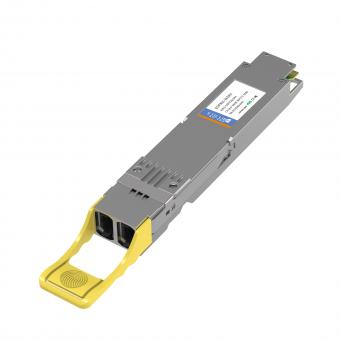
Transceptor óptico 800G OSFP 2×DR4 1310nm 500M MPO12 DDM Lee mas
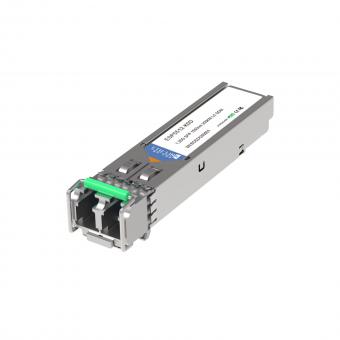
Transceptor óptico LC SFP de 1,25 G, 1550 nm y 200 km Lee mas
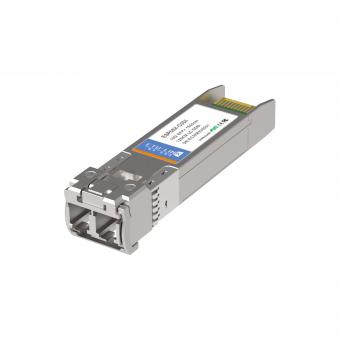

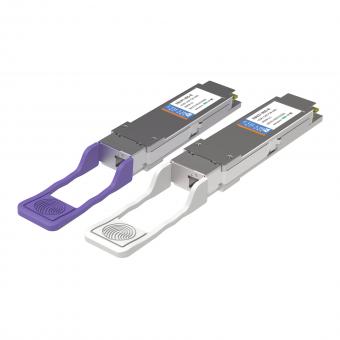
Transceptor óptico LC de 100G QSFP28 LR con sonda Lambda única de 10KM Lee mas
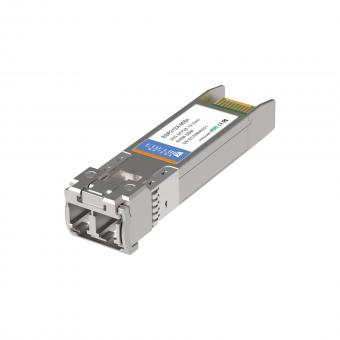
Transceptor óptico de 25G SFP28 ZR 1310nm los 80KM LC Lee mas
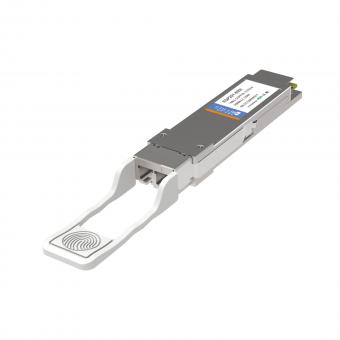
Transceptor óptico de generación II de 100G QSFP28 ZR4 80KM LC Lee mas
Para consultas sobre nuestros productos o lista de precios, déjenoslo y nos pondremos en contacto dentro de las 24 horas.


 13th Floor, Building 6, Honghualing Base, Nanshan Intelligent Manufacturing Base, Liuxian Avenue, Taoyuan Street, Xili, Nanshan District, Shenzhen, China
© Derechos de autor: 2026 ETU-Link Technology CO ., LTD Reservados todos los derechos.

Soporta red IPv6


