

 español




Core Differences of Optical Module OSA
In the optical communication industry, when selecting and developing optical modules, companies often focus on speed, transmission distance, and compatible equipment, but rarely delve into the core optical component—the OSA (Optical Sub-module). In fact, the iterative upgrade of optical module speed is essentially an iteration of the OSA optical architecture, light emission principle, and signal carrying capacity.
Many people also have questions:
Why do low-speed optical modules use ordinary cylindrical OSA, while high-speed modules use silicon photonics integrated circuits?This article avoids repetitive and redundant parameter listings, and explains the core differences of 1G-800G full-rate OSA from three dimensions: popular science principles, iterative logic, and scenario adaptation, making it easy to understand.
The Optical Signal Converter (OSA) is the "photoelectric conversion core" of the optical module. It is completely independent of circuit signal processing and is only responsible for the transmission, reception, and coupling of optical signals. It is divided into three main categories to adapt to different communication scenarios, which is also the basis for all rate iterations:
1.TOSA Transmitter Optical Components: convert electrical signals into optical signals, with the laser chip as the core component;
2.ROSA Receiver Optical Components: capture weak light signals in optical fibers and convert them into electrical signals; the core component is a photoelectric detection chip.
3.BOSA Bidirectional Optical Components: integrate transceiver functions, rely on wavelength division multiplexing technology to achieve bidirectional transmission on a single optical fiber, and are designed for broadband access scenarios.
In simple terms: the upper limit of how fast an optical module can run, how far it can transmit, and the stability of its signal are determined by the OSA (Optical Sequence Amplifier), while the lower limit is determined by the circuit PCB. The difference in OSA speeds is essentially to solve the core problems of "optical signal distortion, insufficient bandwidth, and excessive interference after the speed is increased. "
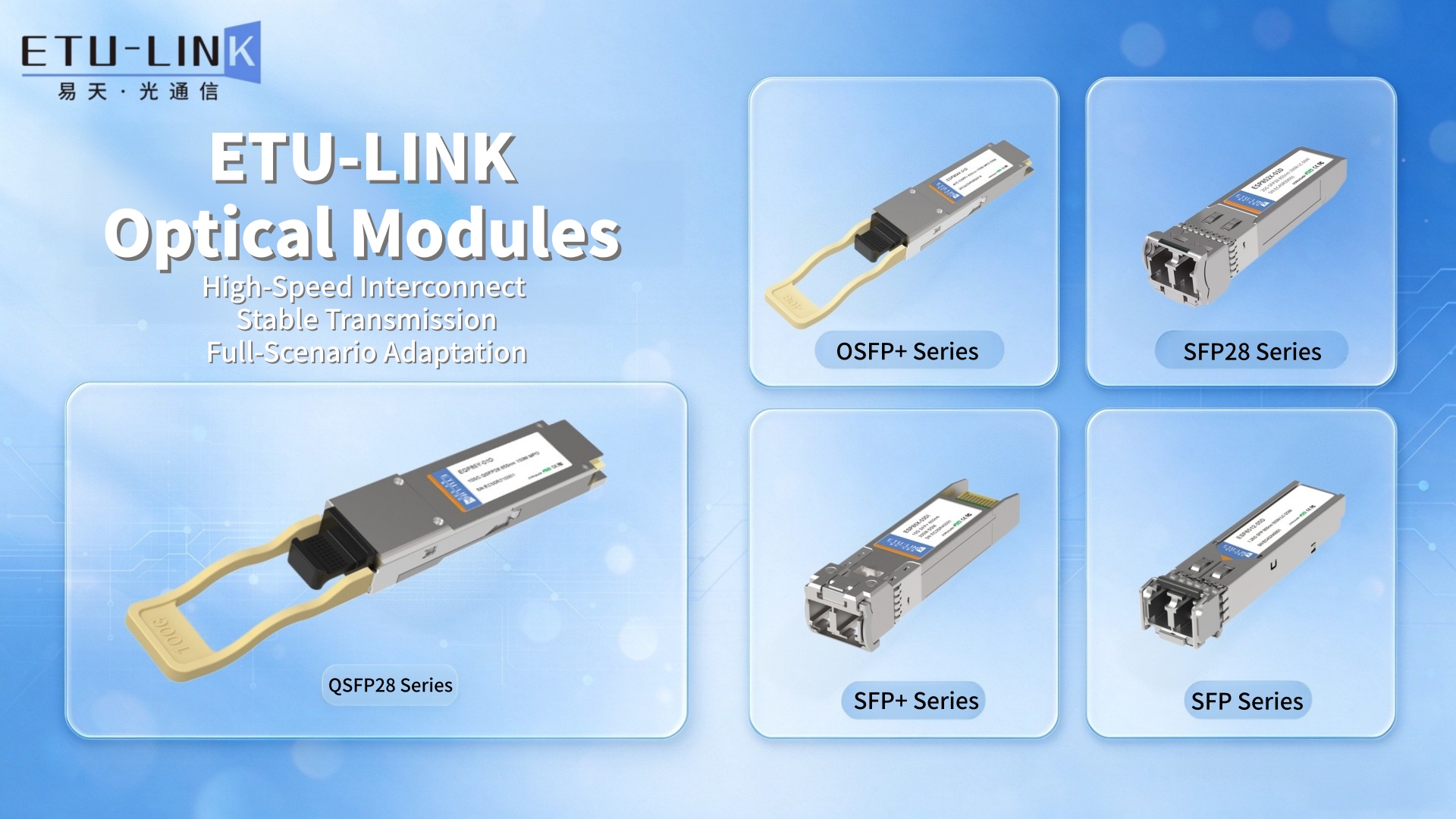
The 1G/2.5G/10G speeds fall under the category of traditional low-speed optical communication. The corresponding OSA technology is fully mature, with core features including single-channel independent packaging, clear structure, high fault tolerance, and extremely low cost. It is also the most popular basic OSA on the market.
1G/2.5G OSA: mainly divided into BOSA for PON scenarios and TOSA+ROSA combinations for switch scenarios.
The laser uses a standard FP laser or a low-speed DFB laser, which has a wide emission spectrum and low bandwidth requirements, and can be paired with a standard PIN photodetector to meet the needs. Because of the low speed and slow electrical signal switching, the optical signal will hardly have any dispersion or distortion problems, and there is no need for complex optical calibration or anti-interference design.
These OSAs all use metal TO46/TO56 cylindrical packages, which are simple to manufacture and have a high yield rate, making them the mainstream choice for home broadband and campus switches.
10G OSA: This is an upgraded version of the low-speed OSA. It still uses traditional TO discrete packaging, but it begins to customize optical solutions for different scenarios.
For short-range multimode scenarios (short interconnects in data centers), VCSELs (vertical-cavity surface-emitting lasers) are used, offering high luminous efficiency and simple coupling. For long-range single-mode scenarios, DFB (diffuse-fiber) narrow-linewidth lasers are used to reduce optical signal dispersion. Additionally, the long-range version can be upgraded with an APD detector to improve low-light reception sensitivity.
The 10G OSA still uses simple high and low level modulation of NRZ, with simple signal logic. The OSA does not require high linearity, making it the most cost-effective general-purpose optical solution.
25G is the recognized limit of traditional TO-packaged OSA speed in the optical communication industry, and it is also the core speed for 5G fronthaul and small and medium-sized data centers, which has great symbolic significance in the industry.
In principle: at 25G speeds, the switching frequency of single-channel electrical signals is significantly increased, and the response speed and emission bandwidth of traditional low-speed lasers are approaching physical limits. Therefore, 25G OSA must use high-speed dedicated DFB lasers and optimize the chip resonant structure to improve signal response speed. Simultaneously, the widespread adoption of 25G BiDi BOSA, relying on high and low wavelength frequency division, achieves high-speed bidirectional transmission over a single fiber, perfectly meeting the cabling requirements for extended 5G base stations.
Why is single-channel TO OSA no longer being upgraded after 25G?
The core reason is the physical bottleneck: when the single-channel rate exceeds 25G, direct modulation of the laser will result in severe signal jitter, dispersion distortion and insufficient bandwidth. No matter how much the packaging or chip is optimized, it is impossible to overcome the physical limitations. This is also the core reason why high-speed OSA must innovate its architecture.
Since 25G is the limit for a single channel, the industry has improved the overall speed through multi-channel parallel technology. OSA has also been upgraded from a "single independent device" to a "multi-channel array combination", which is a key step in the OSA iteration.
40G OSA: Adopting a 4×10G parallel architecture, it integrates four independent 10G TOSA+ROSA sets internally, paired with passive MUX/DEMUX multiplexing/demultiplexing devices to combine four low-speed optical signals into one for transmission. Essentially, it is a "low-speed OSA splicing solution" without any new optical technology breakthroughs. It simply increases the overall speed by stacking channels, offering strong stability and is mostly used in traditional data center interconnects.
100G OSA: Fully upgraded to a 4×25G array architecture, it is the first commercially available high-speed OSA array. It no longer consists of four independent cylindrical TO devices, but integrates four channels of light emission, detection, and coupling structures into a single optical component, significantly reducing size and channel interference. Simultaneously, it employs 25G DFB lasers of different wavelengths, using wavelength division multiplexing (WDM) technology to allow four signals to be transmitted in parallel on the same fiber. NRZ modulation is used throughout, maintaining a high signal fault tolerance rate. Therefore, the 100G optical module offers excellent cost-effectiveness and stability, making it a long-term mainstay in data centers.
200G marks a turning point for OSA, moving from "structural stacking" to "performance transformation." The core breakthrough is the upgrade from NRZ modulation to PAM4 modulation, which is a key difference in high-speed OSA that many people do not understand.
A simple explanation of modulation differences: NRZ has only two levels, high and low, corresponding to 0 and 1 signals. Even if the optical signal has slight distortion, the device can accurately identify it. PAM4, on the other hand, has four levels and can transmit 2 bits of data at once, directly doubling the speed. However, it has extremely high requirements for signal linearity, smoothness, and noise control. Even slight distortion can lead to signal errors.
Therefore, the 200G OSA completely abandons the traditional direct-modulation DFB laser and fully adopts an EML externally modulated laser. The EML laser separates emission and signal modulation, resulting in stable, distortion-free emission that perfectly meets the high-precision signal requirements of PAM4. Simultaneously, the ROSA receiver component has also been completely upgraded, abandoning ordinary detectors and employing a high-linearity, low-noise optoelectronic chip. This is the most crucial difference between the 200G OSA and medium-to-low-speed OSAs !
400G /800G scenarios, traditional discrete and array-type OSA will be phased out one by one, and silicon photonic integrated OSA will become the mainstream solution in the industry. This is a revolutionary upgrade of optical packaging technology.
Core change: Traditional OSA is "discrete component assembly", where lasers, detectors, lenses, and beam splitters are all independent parts, assembled manually/with equipment coupling; while silicon photonic OSA is "chip-level integration", integrating all optical functions such as optical modulation, multiplexing and splitting, optical path transmission, and detection onto a tiny silicon photonic chip.
This architecture brings three core advantages: First, the optical path is more stable, completely solving the problems of multi-channel crosstalk and coupling deviation; second, the size is greatly reduced, adapting to high-density and high-speed optical modules; and third, the bandwidth limit is extremely high, supporting 8×50G and 8×100G PAM4 ultra-high-speed transmission.
Meanwhile, ultra-high-speed OSA has peak requirements for heat dissipation, anti-interference, and impedance matching, requiring dedicated heat dissipation structures and shielding designs, which is also the core reason why the cost of high-speed optical modules is much higher than that of medium and low-speed modules.
1.6T and future ultra-high-speed optical modules have transcended the traditional definition of OSA. The industry adopts CPO co-packaging technology, directly packaging the originally separate OSA optical engine and switch ASIC chip together, eliminating the traditional discrete structure of optical modules.
At this point, there will no longer be independent TOSA/ROSA components. The integration of optics, circuitry, and computing chips is the core technology direction for future high-end data centers.
The lower the data rate, the more OSA prioritizes cost and stability ; the higher the data rate, the more OSA prioritizes linearity, anti-interference, integration, and heat dissipation performance. Understanding the iterative differences in OSA allows for accurate assessment of the performance limits, applicable scenarios, and cost differences of different optical modules, thus avoiding core risks in selection and R&D.
Categorías
nuevo blog
Etiquetas
nuevos productos
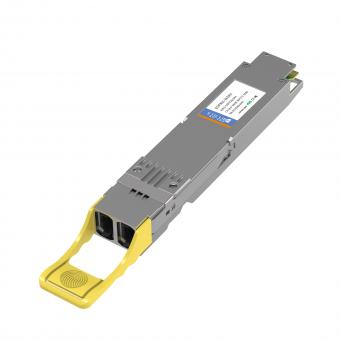
Transceptor óptico 800G OSFP 2×DR4 1310nm 500M MPO12 DDM Lee mas
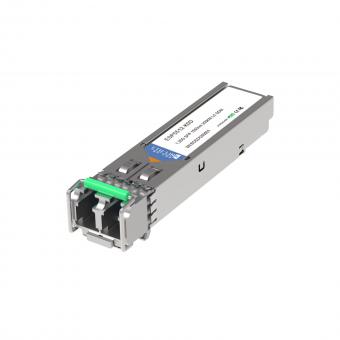
Transceptor óptico LC SFP de 1,25 G, 1550 nm y 200 km Lee mas
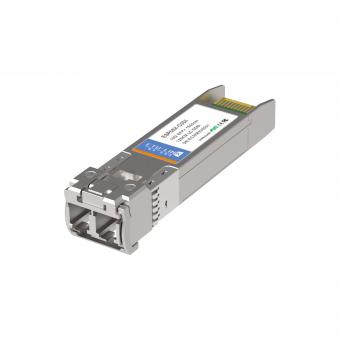

Transceptor óptico LC de 100G QSFP28 LR con sonda Lambda única de 10KM Lee mas
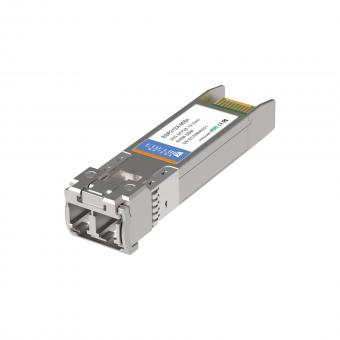
Transceptor óptico de 25G SFP28 ZR 1310nm los 80KM LC Lee mas
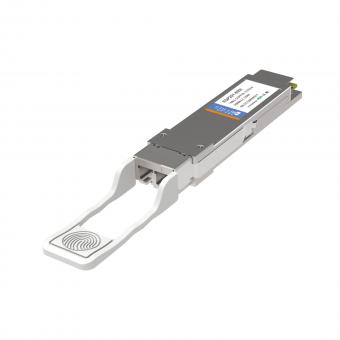
Transceptor óptico de generación II de 100G QSFP28 ZR4 80KM LC Lee mas
Para consultas sobre nuestros productos o lista de precios, déjenoslo y nos pondremos en contacto dentro de las 24 horas.


 13th Floor, Building 6, Honghualing Base, Nanshan Intelligent Manufacturing Base, Liuxian Avenue, Taoyuan Street, Xili, Nanshan District, Shenzhen, China
© Derechos de autor: 2026 ETU-Link Technology CO ., LTD Reservados todos los derechos.

Soporta red IPv6


