

 español



Analysis of Global AI Computing Power Development Trends
The Race and Shifts in the Trillion-Dollar Market
In 2026, the global AI computing power industry stands at an unprecedented historical juncture.
Ⅰ.Computing Power: An Exponential Increase
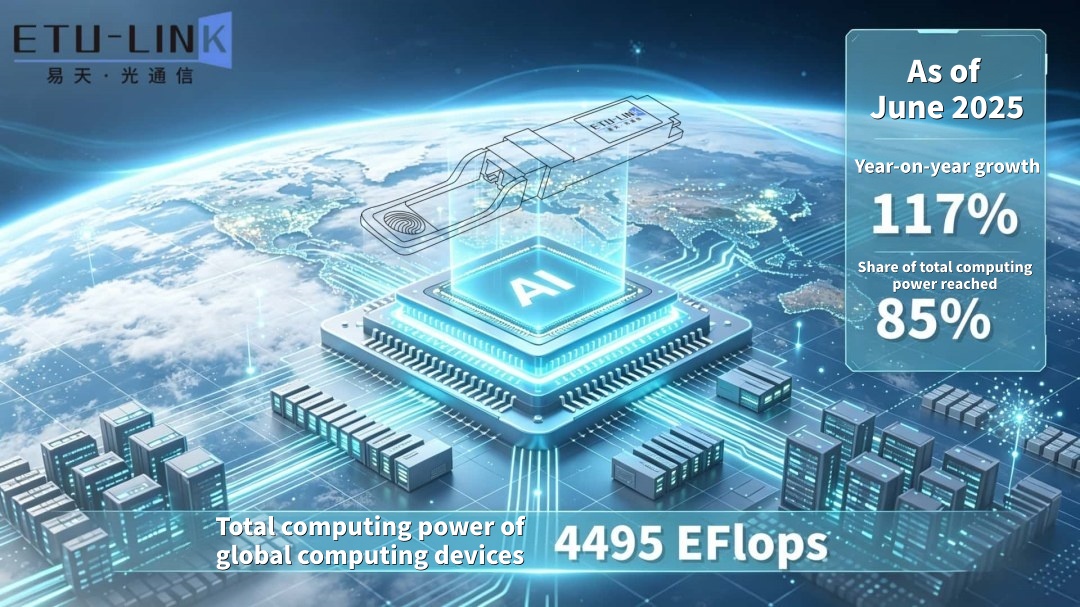
According to the latest report released by an industry research institution, as of June 2025, the total computing power of global computing devices reached 4495 EFlops, a significant year-on-year increase of 117%; intelligent computing power has become the absolute dominant force, accounting for 85% of the total computing power.
This signifies a complete shift in computing power architecture from general-purpose computing to intelligent computing-driven systems. Market size also confirms this trend, with the global AI computing power market reaching trillions of dollars, while the AI semiconductor market, driven by strong demand, accounts for nearly half of the entire semiconductor industry, with annual spending growth remaining in double digits.
Computing Power:
Indicator
Data
Description
Total Global Computing Power
4,495 EFlops
Year-on-year growth of 117%
Share of Global Intelligent Computing Power
85%
Intelligent computing power has become absolutely dominant.
Total Computing Power in China
962 EFlops
Its global share is approximately 21%, representing a year-on-year increase of 73%.
Intelligent Computing Power in China
782 EFlops
Year-on-year growth of 96%, accounting for 81% of my country's computing power.
Global AI Computing Power and Semiconductor Market Size:
Indicator
2025
2026 (Forecast)
2030 (Forecast)
Global AI Computing Power Market Size
—
Approximately $1.2 trillion
—
Global AI Semiconductor Market Size
—
Approximately US$485 billion
Approximately US$753 billion
Total Global Semiconductor Spending
$793 billion (+21%)
AI infrastructure spending exceeds $1.3 trillion
—
Contribution of AI Processors
Over $200 billion
—
It is projected to account for more than half of the semiconductor market by 2029.
Ⅱ.Investment Frenzy: A Trillion-Dollar “Arms Race”
Capital is pouring into AI infrastructure at an unprecedented rate.
Data from multiple market research firms shows that global data center capital expenditure grew by 57% in 2025. Data center capital expenditure is projected to exceed $1 trillion in 2026, primarily driven by the purchase of over 10 million high-end accelerators and related infrastructure.
Global investment in data center systems has accelerated significantly in recent years, jumping from a previously modest single-digit growth rate to a rapid upward trajectory. Looking ahead to the next few years, cumulative AI capital expenditures surrounding computing, data centers, and power will reach trillions of dollars, with annual investment expected to increase year by year. Hyperscale cloud vendors' long-term AI investment plans also reach trillions of dollars.
Ⅲ.Demand Structure: A Paradigm Shift from Training to Inference
The structural changes in computing power demand deserve close attention.
Industry experts point out that inference computing power now accounts for the vast majority of total AI computing power, and computing power applications are shifting from training-driven to inference-driven and agent-driven. This shift means that the AI industry is moving from "laboratory investment" to "large-scale operation," and computing power is changing from a resource exclusive to giants to a daily necessity for all industries.
Driven by this, global AI server shipments have maintained double-digit growth, and their share of the overall server market has continued to increase, with the potential for a more significant leap in the short term.
Ⅳ.Regional Landscape: Accelerated Multipolar Competition
The regional competitive landscape is also changing.
The United States still leads by a wide margin with its massive number of data centers, but China is catching up rapidly. Its total intelligent computing scale has reached a considerable level, with eight major hub nodes contributing the vast majority of the country's intelligent computing power.
In the field of AI chips, the shipment of domestically produced AI accelerator cards continues to climb, and the market share has stabilized at over 40% for the first time. GPUs are no longer the dominant force, and AI computing power is entering a diversified era of collaborative development between GPUs and various dedicated processors.
Competitive Landscape of China's AI Accelerator Card Market in 2025:
|
Manufacturer Category |
Shipments (10,000 units) |
Market Share |
|
NVIDIA |
Approximately 220 |
55% |
|
Domestic Manufacturers |
Approximately 165 |
41% |
|
AMD and Others |
Approximately 15 |
4% |
|
Total |
Approximately 400 |
100% |
In this magnificent wave of AI computing power, high-speed optical communication, as a key infrastructure connecting computing power clusters, is playing an indispensable role. ETU-Link Technology Co., Ltd. provides solid support for high-speed interconnection of global AI data centers with its continuously innovative optical modules and interconnect solutions.
The race for AI computing power is far from over. From chips to servers, from data centers to optical interconnects, from training to inference, every link is undergoing profound restructuring. 2026 is just the beginning of this trillion-dollar transformation. In the coming years, the computing power industry will continue to maintain strong growth momentum, and technological roadmaps, regional landscapes, and business models will continue to evolve, warranting close attention from all participants.
Categorías
nuevo blog
Etiquetas
nuevos productos
Transceptor óptico 800G OSFP 2×DR4 1310nm 500M MPO12 DDM Lee mas
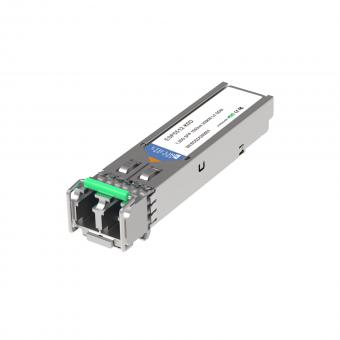
Transceptor óptico LC SFP de 1,25 G, 1550 nm y 200 km Lee mas
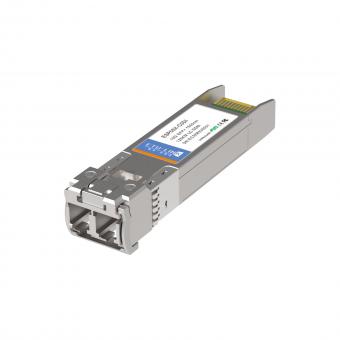

Transceptor óptico LC de 100G QSFP28 LR con sonda Lambda única de 10KM Lee mas
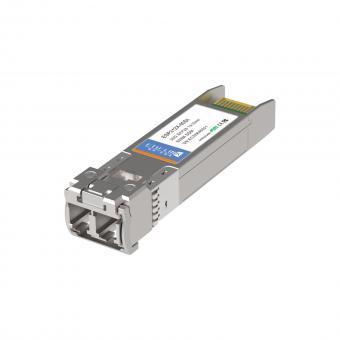
Transceptor óptico de 25G SFP28 ZR 1310nm los 80KM LC Lee mas
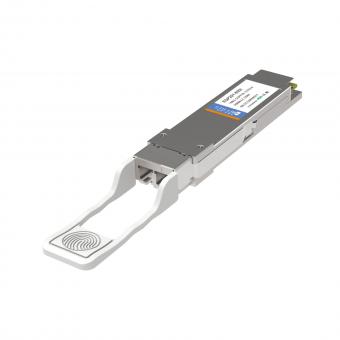
Transceptor óptico de generación II de 100G QSFP28 ZR4 80KM LC Lee mas
Para consultas sobre nuestros productos o lista de precios, déjenoslo y nos pondremos en contacto dentro de las 24 horas.


 13th Floor, Building 6, Honghualing Base, Nanshan Intelligent Manufacturing Base, Liuxian Avenue, Taoyuan Street, Xili, Nanshan District, Shenzhen, China
© Derechos de autor: 2026 ETU-Link Technology CO ., LTD Reservados todos los derechos.

Soporta red IPv6


