

 español



Analysis of Trends in the Localization of Optical Module Chips
China country has captured over 60% of the global optical module manufacturing capacity, but behind this impressive overall production capacity, high-end optical chips and high-speed DSP chips remain the weakest links in the industry chain. With the explosive growth of AI computing power, the accelerated adoption of 800G, and the commencement of 1.6T mass production, the self-sufficiency and controllability of upstream chips has become an unavoidable issue for the industry.
I. Industry Chain Landscape
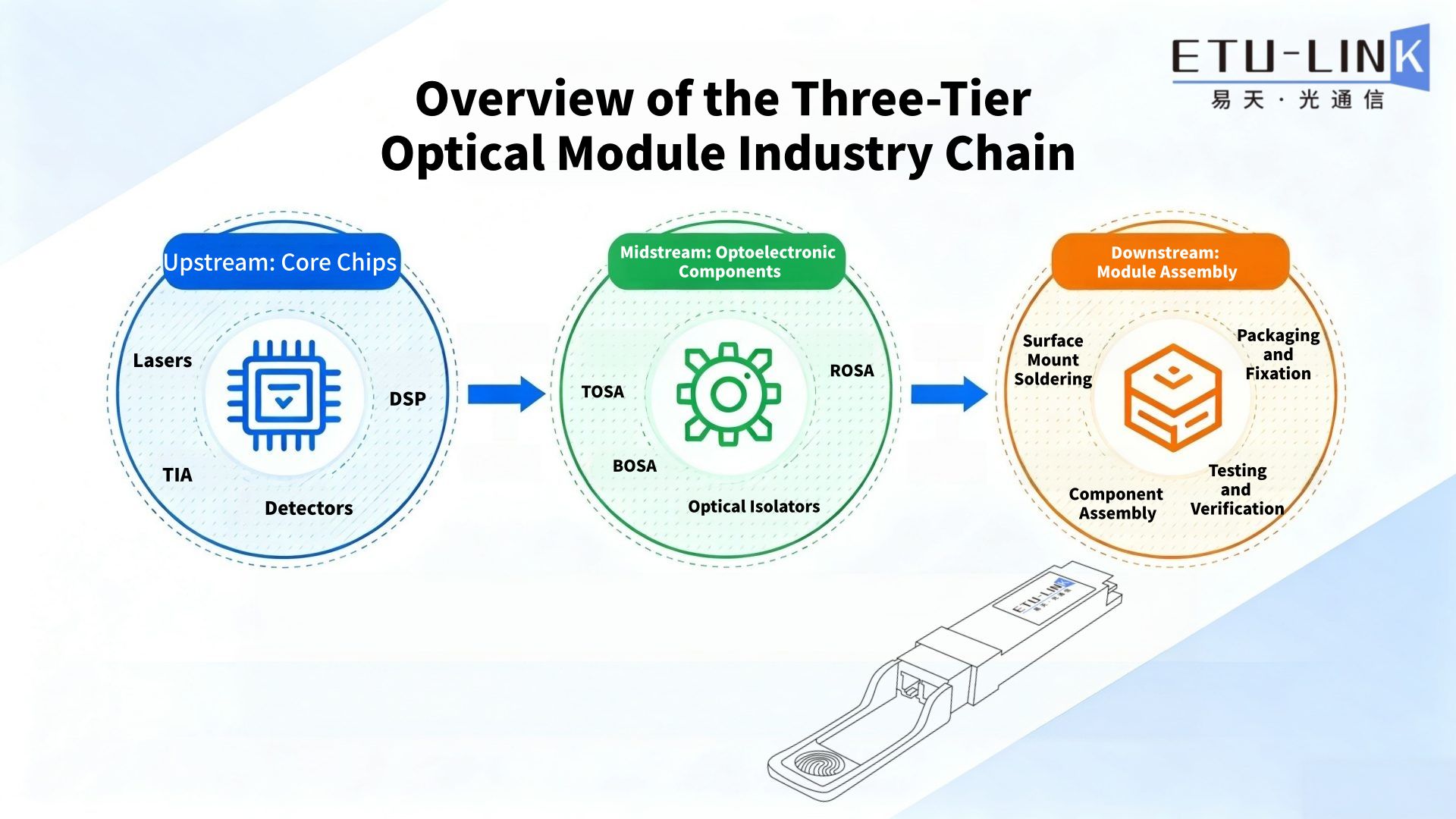
The optical module industry chain can be simply divided into three layers: downstream module assembly, midstream optoelectronic devices, and upstream core chips.
The two core chips of optical modules are optical chips (laser EML and detector PD) and high-speed electrical chips (DSP, TIA, and laser driver chips), which are also the two main battlegrounds for domestic substitution.
Optical Chips: responsible for electro-optical and photoelectric signal conversion. In high-speed optical modules, they can account for 30% to 50% of the cost. The high-end 200G EML market has long been dominated by overseas manufacturers such as Lumentum, Coherent, and Mitsubishi Electric.
High-Speed DSP Chip: known as the "brain" of optical modules, are currently the most critical bottleneck.
The localization progress of the two shows a clear divergence:
Optical Chips: Low-speed 25G and below DFB chips have basically achieved domestic self-sufficiency and control; 100G EML has achieved mass production and delivery; 200G EML has entered the sampling-small batch mass production ramp-up stage. Several leading domestic companies have already entered the mass production stage for 200G EML.
High-Speed DSP Chips: The commercial mass production of PAM4 DSPs for 800G and 1.6T chips is progressing slowly. Compared with EML chips, DSPs are more difficult to replace.
II. DSP Chips: Core Barriers and Oligopolistic Market Structure
1.Why is a DSP Indispensable?
When the single-wavelength rate reaches 100G and 200G PAM4, which is the stage of 800G and 1.6T optical modules, high-speed signals are easily affected by dispersion, noise and nonlinear effects after being transmitted through optical fiber, resulting in waveform distortion.
The core function of a DSP chip is to reconstruct signals. The complete workflow consists of three steps:
1).Transmitter: The DSP completes signal pre-coding and pre-equalization to compensate for high-frequency loss, and then outputs the optimized analog electrical signal through the DAC digital-to-analog converter, which is amplified to drive the laser to emit light.
2).Fiber optic transmission: High-speed optical signals are distorted when transmitted over long distances.
3).Receiver: The photodetector converts the optical signal back into an electrical signal. The DSP's internal ADC completes the sampling and quantization. Relying on equalization algorithms, clock recovery, and FEC forward error correction technology, the clean original signal is restored from the distorted waveform.
In simple terms: the optical chip is responsible for performing the electro-optical conversion, while the DSP is responsible for repairing the damaged signal waveform. For medium- to long-distance transmission scenarios, the DSP is an essential component.
2.Current Challenges Regarding Cost, Power Consumption, and Supply Chain Tensions
DSP is both the most expensive and the most power-consuming single component in high-speed optical modules.
In 800G optical modules, material costs account for 20%-30%; in 1.6T optical modules, the cost share is further increasing.
The DSP consumes approximately half of the total power of the optical module.
High-end DSPs require TSMC's advanced 5nm/3nm process for tape-out, with GPUs taking up a large portion of wafer capacity, leading to continuously lengthening delivery cycles. Currently, the delivery time for an 800G DSP is approximately 6 months, while the delivery cycle for a 1.6T DSP reaches around 9 months.
To ensure order delivery, leading domestic optical module manufacturers have signed long-term supply agreements with Marvell and Broadcom to lock in production capacity for the next 1-2 years.
3.The Global Competitive Landscape
The global high-end 800G-1.6T PAM4 DSP market is highly concentrated.
|
Marvell
(acquired Inphi)
|
60%-70% |
| Broadcom | 20%-30% |
| Credo | 5%-10% |
| MaxLinear | 1%-2% |
Broadcom and Marvell together hold 90% to 95% of the global market share, forming a typical duopoly, with a domestic production rate of less than 1%.
At present, leading domestic optical module manufacturers rely mainly on overseas imports for their DSP supply chain, while simultaneously pursuing two approaches: supporting the verification of domestically produced DSP samples; and developing DSP-free architecture solutions such as LPO and CPO.
4. Why Is It More Difficult to Replace DSPs Than EML Optical Chips?
Many people wonder, since EML chips have made significant breakthroughs, why is DSP progressing so slowly? The barriers are not just in hardware manufacturing, but rather a combination of multiple obstacles:
1)Advanced process barriers: High-speed mixed-signal chips have high tape-out costs and rely on the most advanced wafer technology;
2)Algorithm and IP barriers: Equalization algorithms, advanced FEC error correction IP, and clock recovery algorithms require more than a decade of engineering accumulation, and overseas giants hold a large number of underlying patents;
3)Ecosystem verification barriers: DSPs require long-term joint debugging with switch ASICs, lasers, drivers, and TIA devices, with a complete verification cycle typically lasting 12 to 24 months;
4)Power consumption, performance, and speed: It is difficult to achieve the best of all three at the same time in high-speed scenarios.
III. Two Major Strategies for Domestic Breakthroughs
The current domestic approach to breaking the deadlock is divided into two main directions: direct replacement and architectural innovation to bypass DSP. These two approaches are being pursued in parallel, rather than choosing one over the other.
Route 1: Bypass DSPReduce Dependencies Through Architecture Innovation
Core logic: Change the interconnection scheme, remove the DSP chip inside the optical module, transfer the signal equalization task to the switch side, or directly replace the transmission medium. This is only applicable to short-distance computing power interconnection scenarios.
1.AEC Active Copper Cables
Applicable scenarios: Internal interconnection within a cabinet with a distance of less than 3 meters.
Using active copper cable + Retimer/Redriver signal chip instead of optical module + fiber optic cable, it inherently eliminates the need for DSP chip. Suitable for ultra-short distance connections between server boards.
2.LPO Linear-Drive Pluggable Optics
Applicable scenarios: rack interconnection, transmission distance of 3,100 meters, and short-distance scenarios in AI intelligent computing centers.
The internal DSP of the optical module is directly removed; signal equalization and compensation are handled by the switch ASIC; power consumption is reduced by 40% to 50% compared to traditional DSP-based solutions.
Key to successful implementation: Switch chip manufacturers define the LPO architecture, optical module manufacturers are the implementers, and ecosystem collaboration is the biggest variable in project implementation.
3.CPO Co-Packaged Optics (Medium- to Long-Term Path)
By integrating the optical engine (optical device) with the switch ASIC chip, the electrical signal transmission path is extremely short, resulting in almost no signal distortion and eliminating the need for traditional high-speed DSPs. This represents a next-generation optoelectronic convergence architecture, but large-scale commercialization is still a long way off.
Important Reminder: DSP-free solutions such as AEC, LPO, and CPO only cover short-distance scenarios. Medium- and long-distance data center and backbone network transmissions exceeding 100 meters still rely on DSP chips; architectural innovation cannot completely eliminate the need for domestic DSP substitution.
Route 2: Develop Domestic DSP to Directly Replace Imported Chips
Without altering the current mainstream pluggable optical module architecture, we will develop a domestically produced PAM4 high-speed DSP chip to directly replace Broadcom and Marvell products.
The players in this field can be mainly divided into four categories: DSP chip startups; optical module/chip manufacturers extending upstream into electrical chips; communication equipment manufacturers developing their own chips for internal use; and university research and development projects. Currently, most domestically produced high-speed DSP products are in the sample verification stage and are still some distance from large-scale commercial use.
IV. Forecast of the Phased Trend of Domestic Production of Optical Module Chips
Short Term | 2026–2027: Breakthroughs in optical chips first; DSP development focuses primarily on validation
The domestic market share of 100G EML is rapidly increasing, and 200G EML is entering a small-batch supply cycle, with priority given to domestic computing power customers.
High-speed DSPs are still mainly imported, while domestically produced samples continue to be sent for verification.
The LPO-to-DSP solution has been piloted on a small scale in short-range AI computing scenarios, alleviating the pressure of chip shortage.
Medium Term | 2028–2029: High-speed DSPs are expected to reach a commercial inflection point
200G EML chips have achieved mass production.
A mature second supply chain for domestically produced high-speed analog electrical chips (TIA, Driver) has been established.
The first commercially available domestically produced 800G/1.6T high-speed DSP has been launched, forming a dual supply pattern with overseas chips as the main source and domestic chips as a supplement.
The shortcomings in upstream materials such as indium phosphide epitaxial wafers and substrates are being gradually addressed.
Long Term | 2030 and beyond: A landscape of coexisting dual technology paths takes shape
Long-distance scenarios: Domestic high-speed DSPs are being deployed on a large scale, achieving a high self-sufficiency rate;
Short-distance rack interconnection scenarios: The widespread adoption of DSP-free architectures such as LPO and CPO;
Simultaneously developing new technology tracks such as silicon photonics and thin-film lithium niobate, striving to overtake competitors by changing lanes;
Downstream module manufacturers have long adopted a dual supply chain strategy of "overseas + domestic" to diversify supply risks.
V. Warning on Existing Industry Risks
1.Yield ramp-up of domestically produced high-speed DSP and 200G EML is slower than expected, delaying mass production.
2.The LPO ecosystem adaptation is progressing slower than expected, and switch manufacturers are not keeping pace with their plans.
3.Overseas giants continue to iterate on new-generation DSP products, further widening the technological gap.
4.The supply of upstream components such as indium phosphide substrates, epitaxial wafers, and core production equipment is limited.
Conclusion
China's optical module industry has completed the first stage of its rise through complete machine manufacturing. The next phase, focusing on high-end chips, will be the main theme of the industry's second half. The progress of the optical chip and DSP chip tracks is diverging, with both long and short-term approaches leading to breakthroughs. Achieving self-sufficiency and control over the supply chain will be a gradual and protracted battle. This article is for informational analysis of industry trends only and does not constitute any investment advice.
That concludes this article. If you found this optical chip analysis helpful, please like and save it! We will continue to update you on optical module market trends, technological advancements, and industry chain dynamics, focusing on the AI computing hardware sector. If you're interested, please follow us to stay updated on key industry opportunities.
Categorías
nuevo blog
Etiquetas
nuevos productos
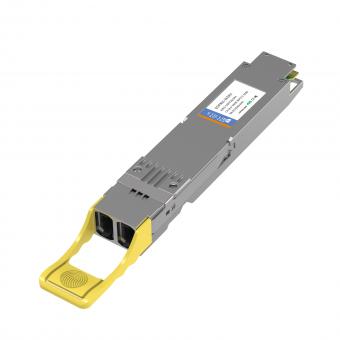
Transceptor óptico 800G OSFP 2×DR4 1310nm 500M MPO12 DDM Lee mas
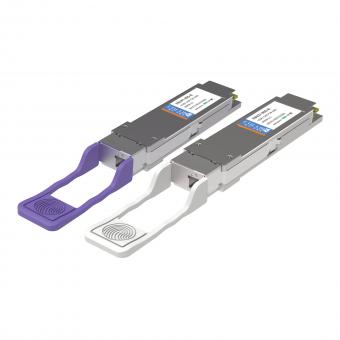
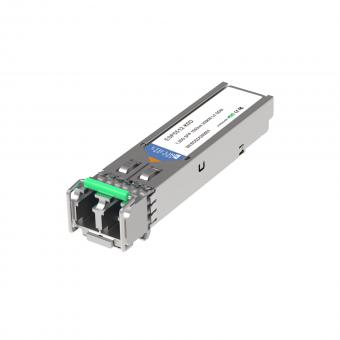
Transceptor óptico LC SFP de 1,25 G, 1550 nm y 200 km Lee mas
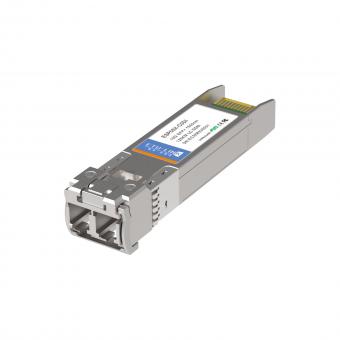

Transceptor óptico LC de 100G QSFP28 LR con sonda Lambda única de 10KM Lee mas
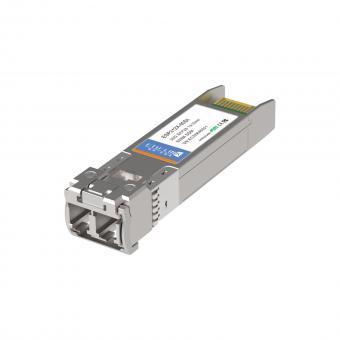
Transceptor óptico de 25G SFP28 ZR 1310nm los 80KM LC Lee mas
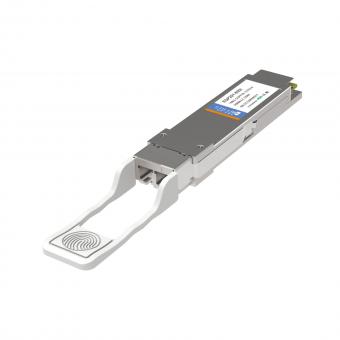
Transceptor óptico de generación II de 100G QSFP28 ZR4 80KM LC Lee mas
Para consultas sobre nuestros productos o lista de precios, déjenoslo y nos pondremos en contacto dentro de las 24 horas.


 13th Floor, Building 6, Honghualing Base, Nanshan Intelligent Manufacturing Base, Liuxian Avenue, Taoyuan Street, Xili, Nanshan District, Shenzhen, China
© Derechos de autor: 2026 ETU-Link Technology CO ., LTD Reservados todos los derechos.

Soporta red IPv6


