español



¿Cómo combinar el módulo óptico 100G con cables de conexión?
Con el crecimiento continuo del tráfico de los centros de datos, las redes de 100G se han convertido en el estándar de la industria. Sin embargo, muchos ingenieros suelen enfrentar un problema práctico al implementar redes de 100G:¿qué tipo de cable de conexión debe utilizarse con módulo óptico de 100Gs?Elegir el incorrecto puede provocar atenuación de señal, fallos de enlace o incluso daños en el equipo. Este artículo proporciona una descripción profesional general de la lógica de compatibilidad entre módulos ópticos de 100G y cables de conexión para su referencia.
Primero, los modos de fibra deben coincidir.
Los módulos ópticos multimodo (como SR4) deben combinarse con fibra multimodo (OM3/OM4), y los módulos ópticos monomodo (como LR4) deben combinarse con fibra monomodo (OS2). Usar juntos módulos ópticos monomodo y cables de conexión multimodo provocará una atenuación grave de la señal o incluso la imposibilidad de transmitir.
Segundo, el tipo de interfaz determina la selección del cable de conexión.
Existen dos tipos principales de interfaces para los módulos ópticos de 100G: interfaces multinúcleo MPO/MTP e interfaces LC.
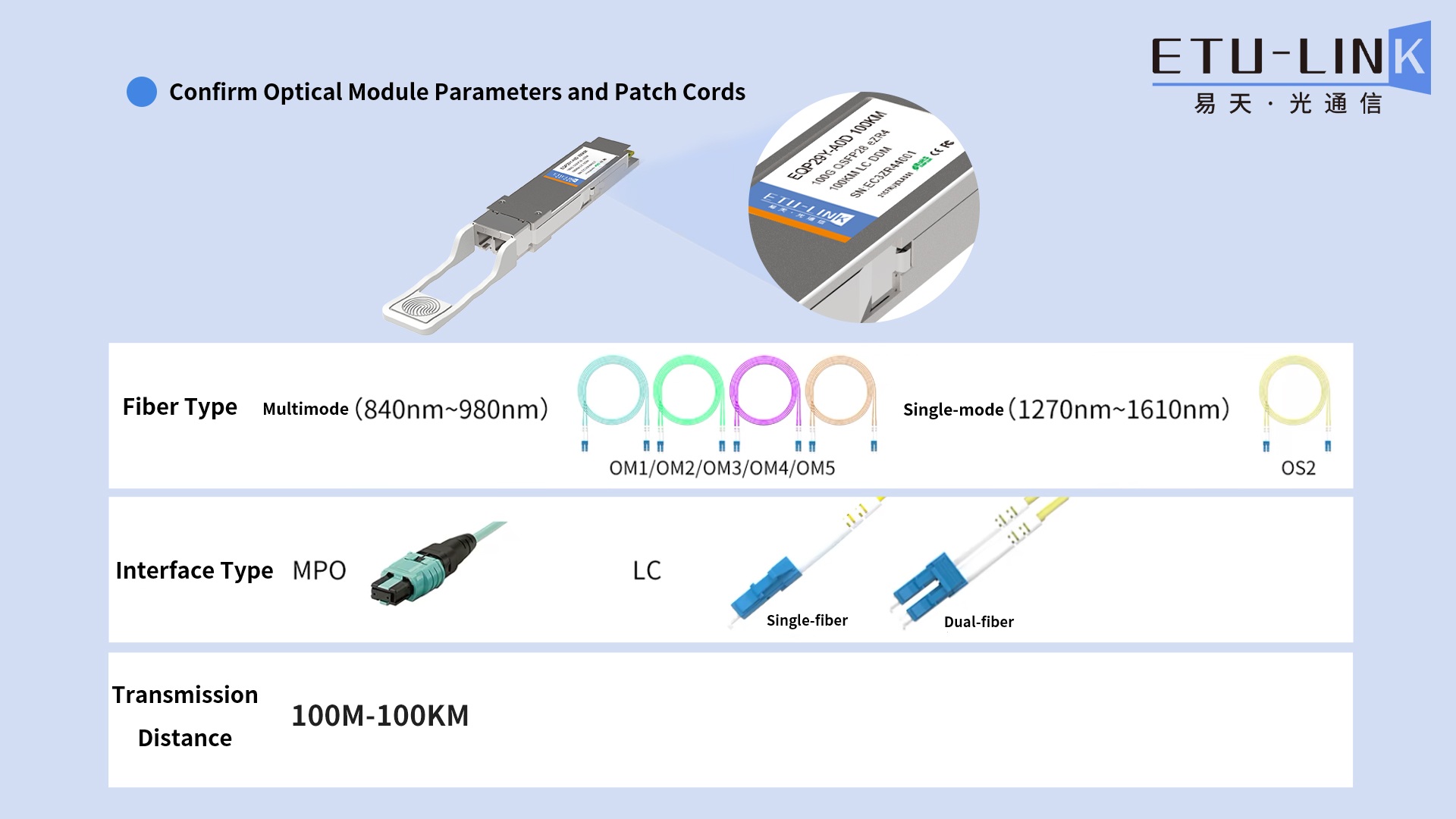
Los módulos ópticos de 100G más utilizados actualmente en centros de datos se encuentran en el encapsulado QSFP28. A continuación se muestran opciones de configuración específicas para varios modelos comunes:
| Modelo ETU | Descripción | Características | Distancia de transmisión | Combinaciones de cables de conexión |
| EQP85Y-01D |
100G QSFP28 SR4
(Multimodo de corto alcance)
|
Emplea tecnología de transmisión multimodo paralela de 4 canales a 25G, adecuada para escenarios como la interconexión entre racks y la conexión entre servidores y conmutadores TOR. |
OM3: 70 m
OM4: 100 m
|
Cable de conexión multimodo MPO/MTP de 12 pines (OM3/OM4), conectores MPO-12 |
| EQP29Y-10D |
100G QSFP28 LR4
(Monomodo de larga distancia)
|
Emplea tecnología de multiplexación por división de longitud de onda de 4 canales a 25G, adecuada para escenarios como enlaces troncales entre salas y la interconexión de redes de área metropolitana. | hasta 10 km | Cable de conexión de fibra óptica monomodo OS2, conectores LC |
| EQP31Y-2D-M |
100G QSFP28 PSM4
(Paralelo monomodo de alcance medio)
|
Emplea tecnología de transmisión paralela monomodo de 25G de 4 canales | hasta 2 km | Latiguillos MPO monomodo de cinta de 8 pines/12 pines, conectores MPO |
|
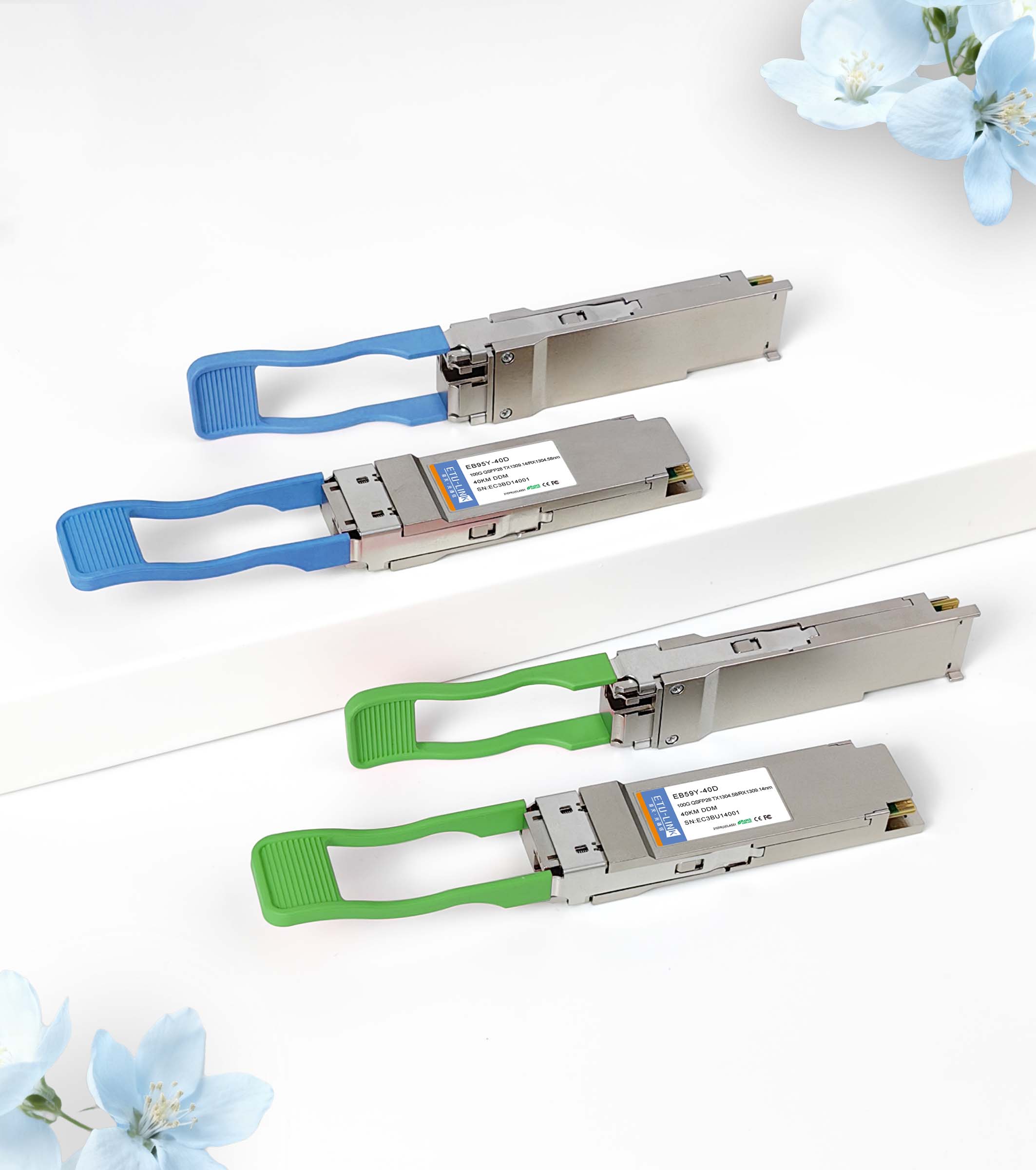
100G QSFP28 CWDM4
(Multiplexación por división de longitud de onda monomodo de alcance medio)
|
La multiplexación de cuatro longitudes de onda diferentes en una sola fibra óptica para la transmisión reduce los costes de fibra y es la opción principal para transmisiones de distancia media. | 10 -20 km | Solo se necesitan dos latiguillos LC monomodo. | |
|
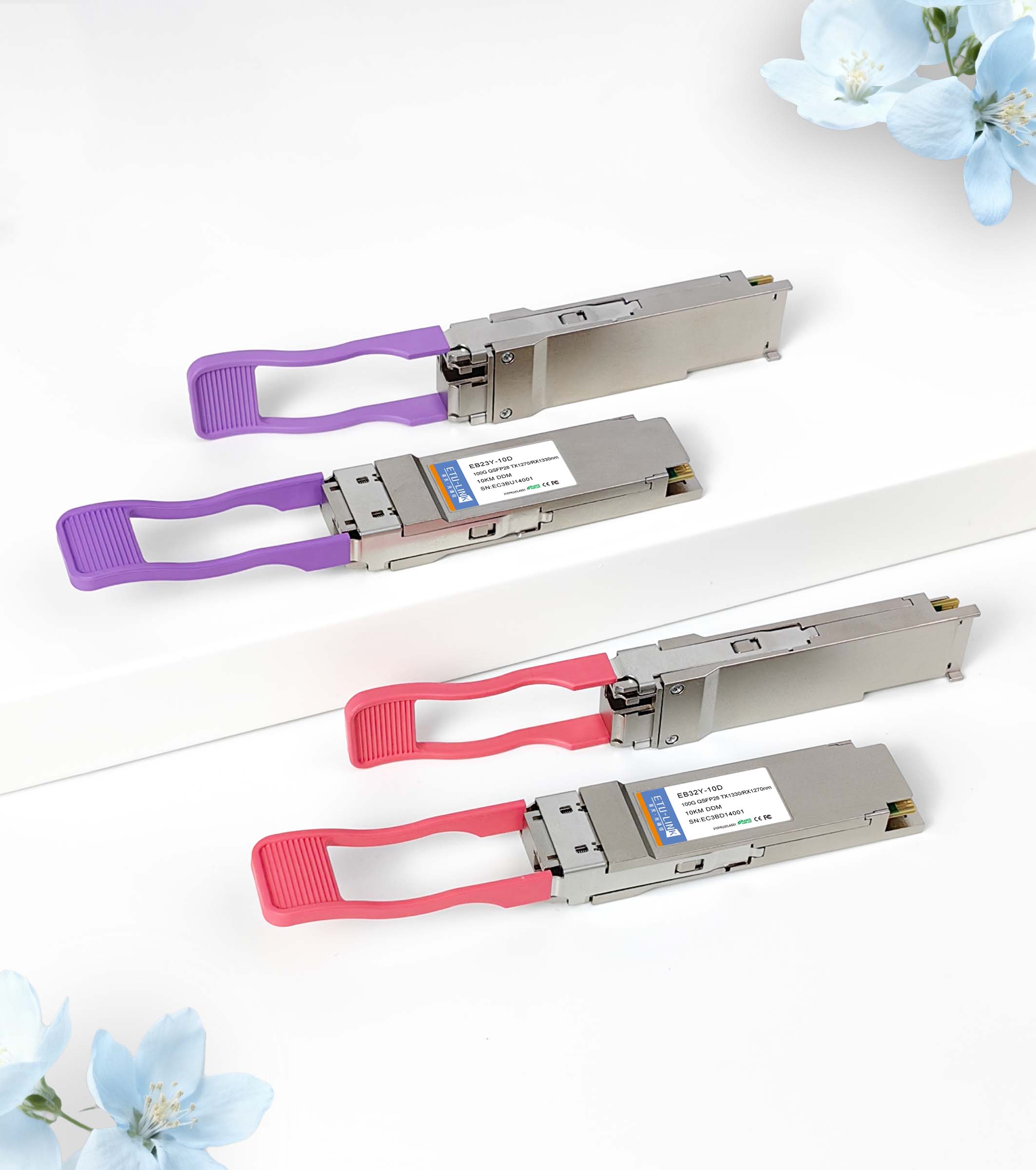
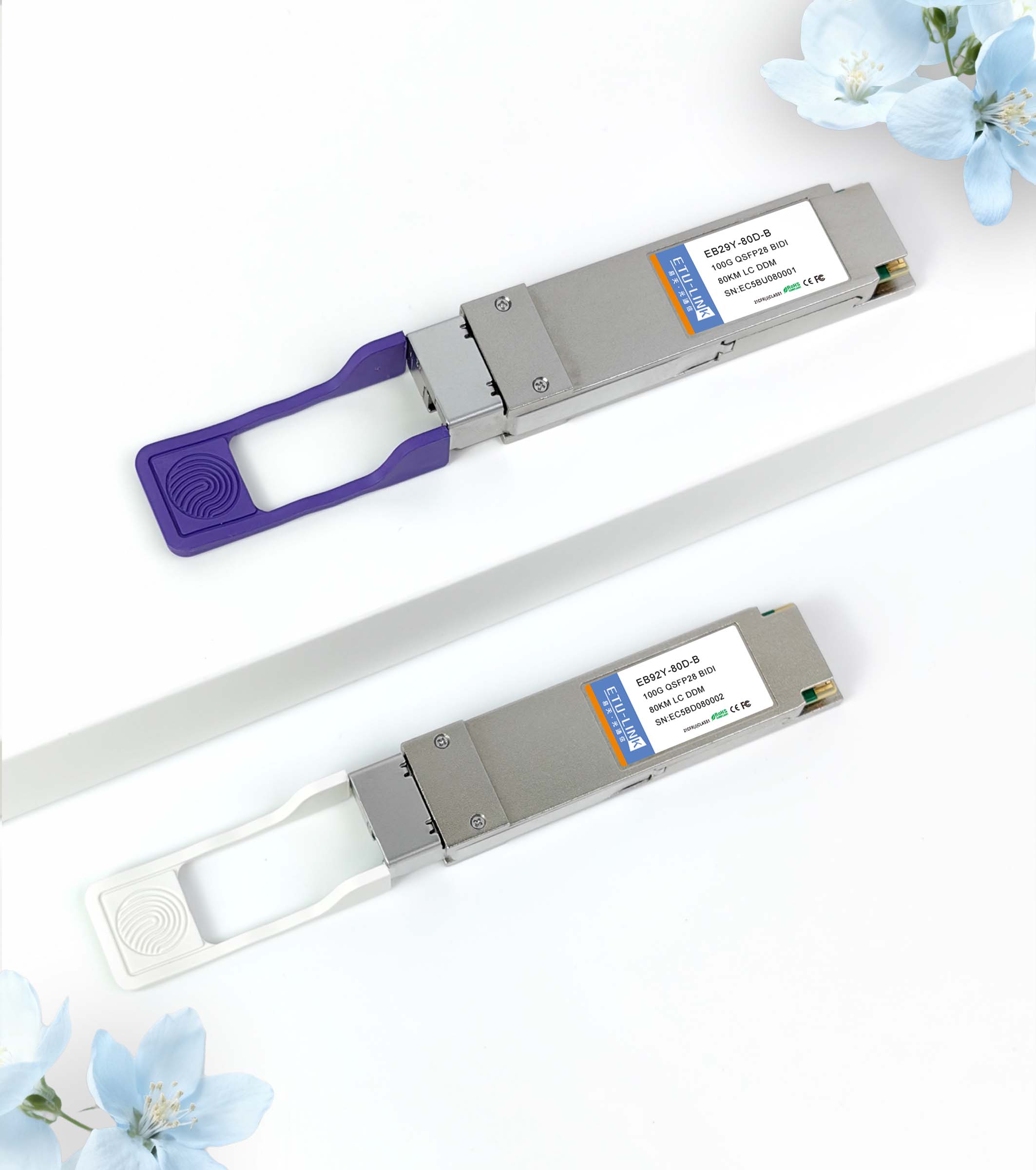
100G QSFP28 BIDI
(Monomodo bidireccional)
|
Al transmitir y recibir simultáneamente señales de diferentes longitudes de onda en la misma fibra óptica, se puede completar la comunicación bidireccional utilizando solo una fibra óptica, reduciendo en un 50% la cantidad de fibra óptica utilizada en comparación con la solución tradicional de dos fibras. | 10-80 km | Latiguillos LC monomodo | |
No se pueden ignorar el número de fibras y la polaridad de los latiguillos MPO. 100G SR4 normalmente utiliza latiguillos MPO de 8 o 12 fibras; se deben confirmar las especificaciones concretas del módulo . Además, las interfaces MPO tienen versiones macho y hembra; las interfaces de los módulos ópticos son principalmente macho, por lo que deben seleccionarse latiguillos hembra .
La cara final del latiguillo debe limpiarse con regularidad,ya que el polvo puede causar atenuación de potencia óptica. La pérdida de inserción de los latiguillos multimodo debe ser ≤0.3dB, y la de los latiguillos monomodo debe ser ≤0.5dB .
En implementaciones reales, ETU-LINK como fabricante profesional de módulos ópticos puede proporcionar una gama completa de módulos ópticos y soluciones de latiguillos compatibles, desde 100G SR4 hasta LR4 y desde interfaces MPO hasta LC, ofreciendo una solución integral de interconexión óptica para las actualizaciones de redes de centros de datos.
La lógica principal para combinar latiguillos de módulos ópticos 100G es: determinar el modo de fibra (monomodo/multimodo) y el tipo de interfaz (MPO/LC) según el tipo de módulo, y después seleccionar las especificaciones adecuadas del latiguillo. Antes de la implementación, se recomienda consultar las especificaciones del módulo y realizar pruebas de potencia óptica para garantizar que el presupuesto del enlace cumpla con los estándares. Elegir los latiguillos adecuados es fundamental para que la red 100G alcance el rendimiento previsto.
¿Por qué elegir el transceptor óptico ETU-Link?
Como fabricante profesional con más de 12 años de presencia consolidada en la industria de la comunicación óptica, ETU-LINK se especializa en módulos ópticos de serie completa de 10G/25G/100G/400G/800G y dispositivos de comunicación óptica de soporte. Todos nuestros productos cumplen con las certificaciones FCC, CE y RoHS, y son totalmente compatibles con los principales equipos de red de marca del mercado.
También ofrecemos servicios flexibles de personalización OEM/ODM para adaptarnos a diversos requisitos de proyectos, con una política líder de garantía de 3 años y una entrega rápida de pedidos.
Productos relacionados
Categorías
nuevo blog
Etiquetas
nuevos productos
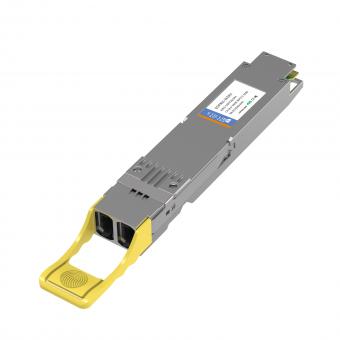
Transceptor óptico 800G OSFP 2×DR4 1310nm 500M MPO12 DDM Lee mas
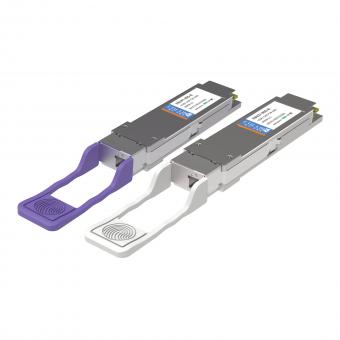
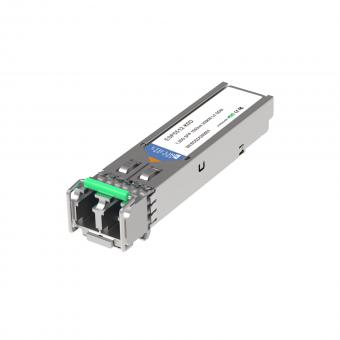
Transceptor óptico LC SFP de 1,25 G, 1550 nm y 200 km Lee mas
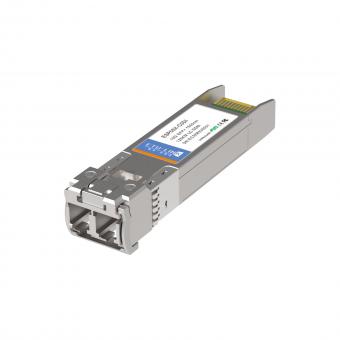

Transceptor óptico LC de 100G QSFP28 LR con sonda Lambda única de 10KM Lee mas
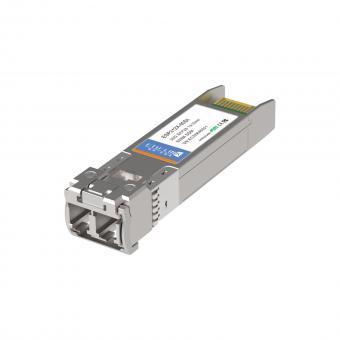
Transceptor óptico de 25G SFP28 ZR 1310nm los 80KM LC Lee mas
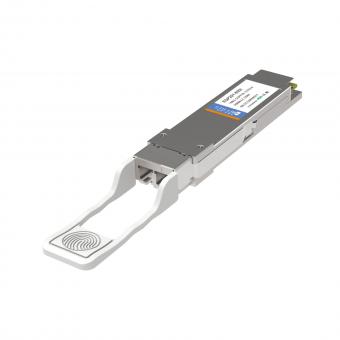
Transceptor óptico de generación II de 100G QSFP28 ZR4 80KM LC Lee mas
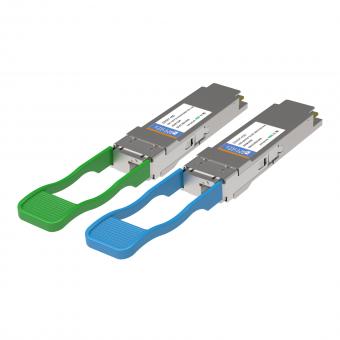
Para consultas sobre nuestros productos o lista de precios, déjenoslo y nos pondremos en contacto dentro de las 24 horas.


 13th Floor, Building 6, Honghualing Base, Nanshan Intelligent Manufacturing Base, Liuxian Avenue, Taoyuan Street, Xili, Nanshan District, Shenzhen, China
© Derechos de autor: 2026 ETU-Link Technology CO ., LTD Reservados todos los derechos.

Soporta red IPv6