

 español



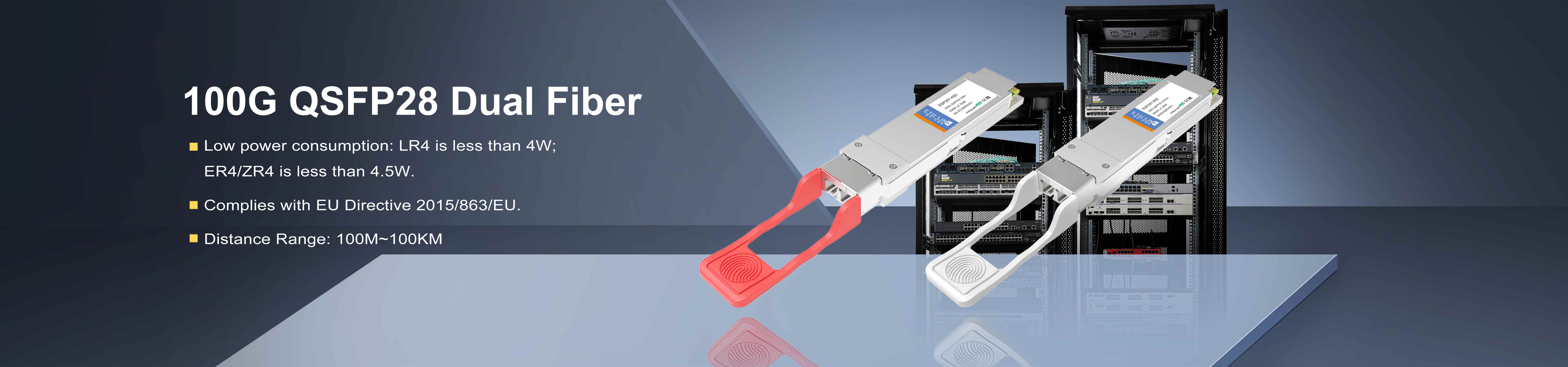
Why Is the U.S. Adjusting Its Policy to Restrict Imports of Chinese Optical Module Products?
Reuters reports that the U.S. FCC is pushing forward with new regulations that plan to restrict the entry of Chinese-made 1.6T and 3.2T high-speed optical modules into the U.S. market. On August 7, a third supplementary rule announcement was released, officially opening a 30-day comment period by a 45-day response period for public feedback.
The US has repeatedly raised the issue of "data security," but the industry's technical consensus has long pointed out that optical modules only realize photoelectric signal conversion and do not have storage or remote control functions, making it difficult to implant backdoors to steal data.
Beyond the surface pretexts, this regulation is essentially a struggle for control of the computing power industry chain. Below, we'll analyze real industry data to dissect the underlying logic behind the US's willingness to harm its own AI industry in order to contain China's optical modules.

I. Optical Modules: The Indispensable "High-Speed Blood Vessels" of AI Computing Clusters
GPUs are the computing core of AI servers, and optical modules are the vital transmission arteries connecting tens of thousands of GPUs. The training of large-scale models using tens of thousands of GPUs, AI inference clusters, and the massive data exchange between all servers and switches all rely on high-speed optical modules. Without high-performance optical interconnects, even a large number of GPUs will become isolated computing islands.
Industry research firm LightCounting predicts that the global optical module market will reach $28.5 billion in 2026, a year-on-year increase of 60%, and will approach $60 billion in 2031. High-speed optical modules for AI data centers, including 800G, 1.6T, and 3.2T modules, will contribute over 70% of this growth, making them strategic hardware for next-generation AI infrastructure.
II. Current State of the Industry: Chinese Manufacturers Have Established an Overwhelming Advantage in High-End Optical Modules
The global optical module market structure has long been severely unbalanced, which is also the most direct reason for the US to introduce restrictive policies.
Product Category
Global Market Share of Chinese Manufacturers
Supplementary Explanation
All Optical Modules
(including Telecom and Data Communication)
62%~70%
China accounts for 7 of the top 10 global vendors
800G High-Speed Optical Modules
(Mainstream AI Models)
>70%
The four major North American cloud vendors' 800G procurement orders largely come from leading domestic enterprises.
1.6T Next-Generation Optical Modules
(Next-Generation Mainstays)
50%~70%
2026 marks the beginning of its commercialization phase, with domestic companies taking the lead in completing validation with top clients.
Data source: LightCounting 2025-2026 Global Data Communication Optical Module Market Report
The gap between leading companies is even more pronounced: a leading Suzhou-based optical module manufacturer holds approximately 27% of the global optical module market share; while all US-based optical module companies combined hold less than 25%. Many US manufacturers lag behind leading Chinese companies in high-end product capacity, yield, and delivery time.
The monthly production capacity of 800G optical modules by US manufacturers is only tens of thousands; while the monthly production capacity of high-speed optical modules by leading domestic companies can reach hundreds of thousands, with a mass production yield exceeding 90%, significantly higher than the level of around 70% for overseas manufacturers.
III. A Layer-by-Layer Analysis: The Four True Objectives Behind U.S. Restrictions on Chinese Optical Modules
1. Closing Gaps in the AI Blockade Chain to Prevent Breaches in Computing Power Containment.
Over the past few years, the United States has continuously introduced control measures, restricting the export of high-end GPUs, advanced lithography machines, and EDA software to China in an attempt to stifle China's AI computing power development. However, there is a huge loophole in this blockade chain— high-speed optical modules. Even with restrictions on GPU imports, China can still build large-scale intelligent computing clusters and promote the continuous iteration of large models by relying on domestically developed and controllable optical interconnect hardware.
Once domestically produced 1.6T and 3.2T optical modules continue to dominate the North American market, domestic manufacturers will rely on overseas orders to obtain continuous R&D funding and constantly iterate on cutting-edge technologies such as CPO and silicon photonics. Restricting the next generation of Chinese optical modules is aimed at filling the gaps, achieving a complete blockade from chips and storage to network transmission, and slowing down the development of general artificial intelligence in China.
2. Protecting the Domestic Optoelectronics Industry and Securing a Leading Role in the Next-Generation Technology Race.
The competition in traditional 800G products is now largely settled, and it will be difficult for American companies to reverse their disadvantage. The focus of the competition is now on next-generation products such as 1.6T, 3.2T, and CPO co-packaged optics. Without market barriers, the next-generation optical interconnect market will continue to be dominated by Chinese companies for the next 3-5 years. The US hopes to create supply chain barriers through import controls.
Increase compliance costs for Chinese companies going global;
This forces North American cloud vendors such as Google, Meta, and Microsoft to distribute their procurement orders;
This will give local manufacturers a buffer period for capacity expansion and customer verification.
In short: relying on administrative barriers to compensate for marketcompetition disadvantages and prevent local optical module companies from being completely eliminated in the new round of technology cycle.
3. To drive “de-Chinaization” of the supply chain and create an industrial buffer zone.
This policy is very strategically designed: existing products are likely to be exempted, while the focus is on blocking the new generation of 1.6T/3.2T optical modules. In the short term, it won't immediately impact existing orders, but in the long term, it will directly cut off the largest overseas market for domestically produced high-speed optical modules, severing the revenue stream for next-generation products. At the same time, the US continues to work with its allies to push for the relocation of optical module packaging to Southeast Asia and Mexico, guide North American cloud vendors to build alternative supply chains independent of China, and erect a wall of industrial isolation against China in the core AI hardware field.
4. To standardize the use of “security pretexts” and replicate the suppression model used against telecommunications equipment.
"Cybersecurity and data breaches" are merely common rhetoric. This narrative was repeatedly used during the crackdown on Huawei's telecommunications equipment, yet no concrete evidence has been presented. Optical module hardware architecture lacks an independent operating system and data storage unit, and technically lacks the physical conditions for remote information theft. The US's overgeneralization of the concept of national security is essentially a tool for trade protectionism and industrial competition.
IV. The Double-Edged Sword of Policy: The Ban May Ultimately Result in a “Losing-Losing” Situation
Multiple industry surveys indicate that North America will find it difficult to find large-scale production capacity to replace China in the short term. Third-party estimates suggest that it will take overseas manufacturers at least 12-24 months to fill the production capacity gap left by China's optical module industry. The ban will have multiple negative consequences:
1) Rising AI construction costs in North America: Changing suppliers and redoing product validation will lengthen the data center construction cycle, increase hardware procurement costs, and slow down the deployment of large-scale models in the United States.
2) The supply chain cannot be completely severed: optical fibers, passive devices, and some supporting components still rely on the Chinese industrial chain, and simply restricting the import of finished products is only a temporary solution.
3) Domestic manufacturers are accelerating their market diversification: Chinese companies are vigorously expanding into the computing power markets of the Middle East, Southeast Asia, and Europe to offset potential losses in the US market; at the same time, they are continuing to tackle high-speed optical chips and promote the self-reliance and control of the industrial chain.
Conclusion
From high-end chips to today's optical modules, the underlying logic of a series of US technology regulations has always been consistent: when Chinese industries gain a competitive advantage in the high-end manufacturing sector, the US uses administrative power to intervene in free market competition.
The competition for optical modules is no longer just a market game for a single component; it's a long-term struggle for dominance in global AI computing infrastructure. While short-term external barriers may cause industry pain, a complete midstream manufacturing supply chain, continuously expanding domestic demand for intelligent computing, and ongoing breakthroughs in upstream optical chips will sustain my country's optical communication industry through economic cycles.
Follow ETU-LINK Optical Communications, we continuously track policies and industry data related to the optical module, optical device, semiconductor, and AI industry chains, providing timely interpretations of the industrial opportunities and risks behind the technological competition among major powers, and ensuring we don't miss any key industry signals.
Interactive topics
How much impact do you think the ban on optical modules will have on China's computing power industry chain if it is officially implemented? How long will it take for domestically produced high-speed optical chips to achieve large-scale self-sufficiency? Welcome to share your thoughts in the comments section.
Categorías
nuevo blog
Etiquetas
nuevos productos
Transceptor óptico 800G OSFP 2×DR4 1310nm 500M MPO12 DDM Lee mas
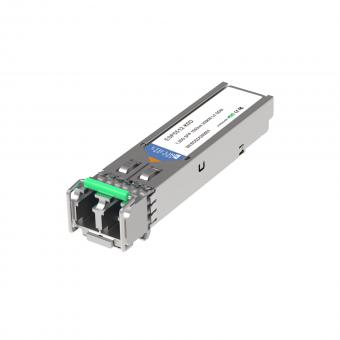
Transceptor óptico LC SFP de 1,25 G, 1550 nm y 200 km Lee mas
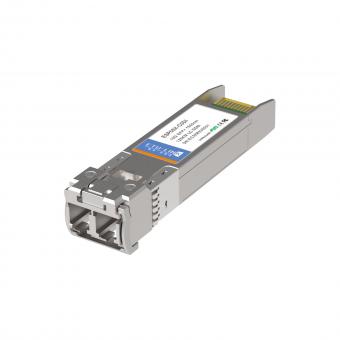

Transceptor óptico LC de 100G QSFP28 LR con sonda Lambda única de 10KM Lee mas
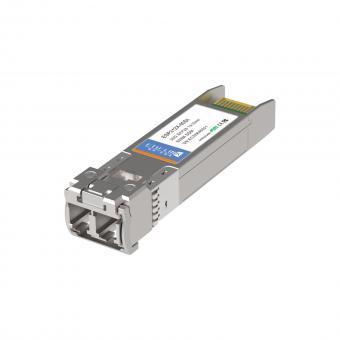
Transceptor óptico de 25G SFP28 ZR 1310nm los 80KM LC Lee mas
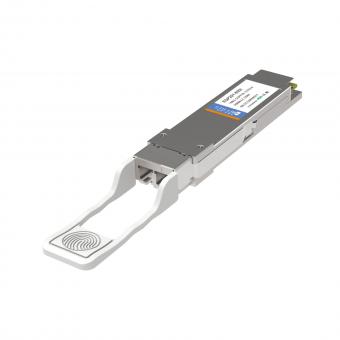
Transceptor óptico de generación II de 100G QSFP28 ZR4 80KM LC Lee mas
Para consultas sobre nuestros productos o lista de precios, déjenoslo y nos pondremos en contacto dentro de las 24 horas.


 Factory: Right Side Of 3rd Floor, No. 102 Building, Longguan Expressway, Dalang Street, Longhua District, Shenzhen
Office: Floor 4, Building 4, Nanshan Yungu Phase ll, Taoyuan Community, XiliStreet,Nanshan District, Shenzhen
© Derechos de autor: 2026 ETU-Link Technology CO ., LTD Reservados todos los derechos.

Soporta red IPv6


