

 español



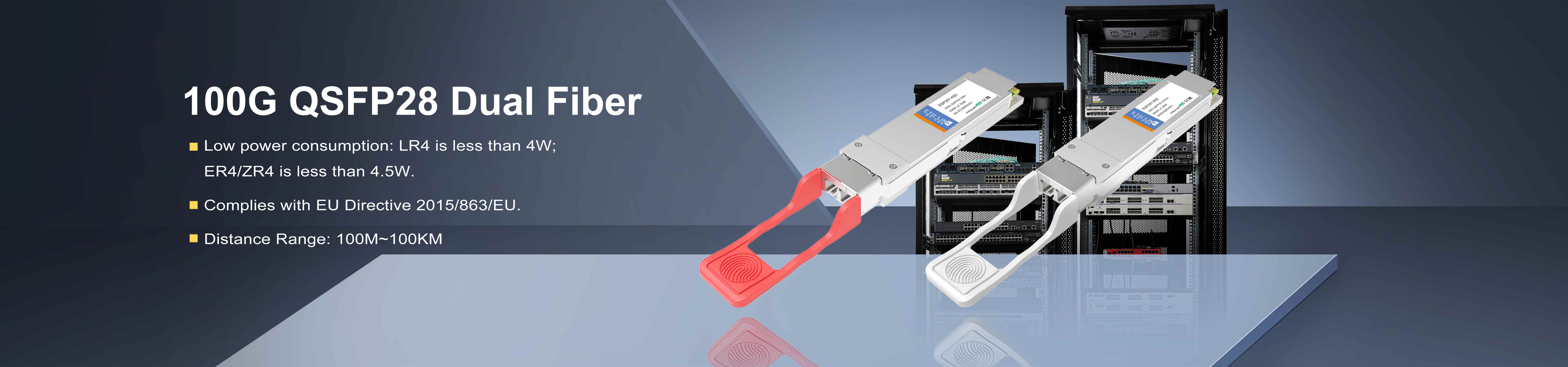
Módulo óptico de 100 G: fibra simple vs. fibra doble
En los módulos ópticos de 100G, los módulos de fibra única ahorran recursos de fibra mediante la tecnología de multiplexación por división de longitud de onda (WDM), lo que los hace ideales para escenarios con recursos de fibra limitados o transmisiones de larga distancia. Los módulos de fibra dual presentan una estructura simple y un bajo costo, lo que los hace ideales para escenarios de corta distancia o alta confiabilidad. A continuación, se presenta un análisis comparativo detallado:
I. Estructura física e interfaz
Fibra única
METRO
módulo
Tiene una sola interfaz de fibra óptica y logra transmisión bidireccional a través de una sola fibra. Su núcleo reside en el uso de la tecnología de multiplexación por división de longitud de onda (WDM), que carga señales ópticas de diferentes longitudes de onda (como TX1330nm/RX1270nm) en la misma fibra para lograr una transmisión de datos bidireccional a una velocidad de 100 Gbps.
Doble fibra
METRO
módulo
Cuenta con dos interfaces de fibra óptica independientes: una para la transmisión y otra para la recepción de señales ópticas. Una fibra se encarga de la transmisión de datos y la otra de su recepción, eliminando así la necesidad de la compleja tecnología de multiplexación por división de longitud de onda (WDM).
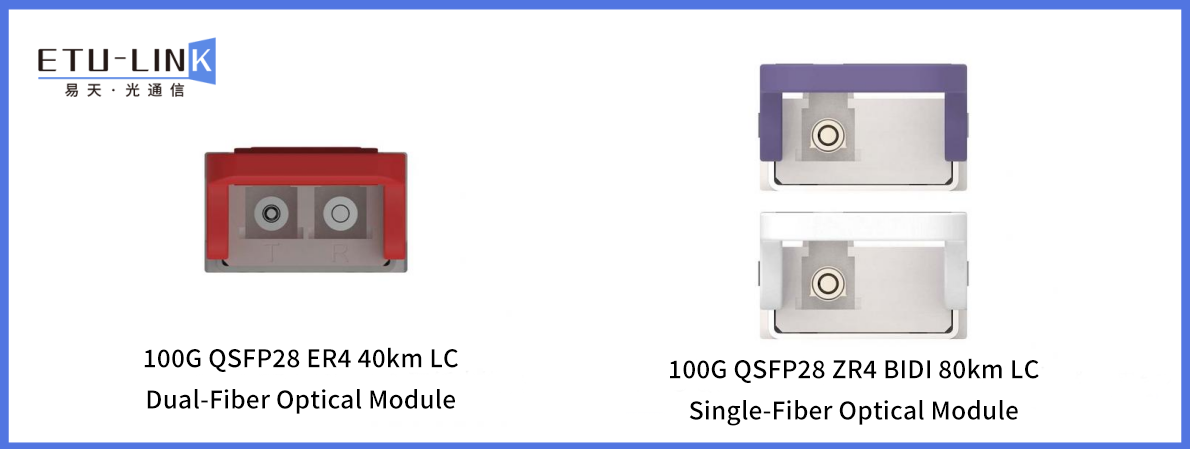
II. Longitud de onda y tecnología de transmisión
Fibra única
METRO
módulo
Utiliza dos señales ópticas de diferentes longitudes de onda para la transmisión bidireccional. Por ejemplo, las longitudes de onda de un módulo monofibra de 100G pueden ser 1271/1331 nm, 1291/1311 nm, 1304/1309 nm, etc. Este diseño permite que el módulo monofibra transmita datos en dos direcciones simultáneamente en la misma fibra óptica.
Dos fibras
METRO
módulo
Estos suelen utilizar señales ópticas de la misma o diferente longitud de onda, pero se transmiten de forma independiente. En un sistema de dos fibras, las longitudes de onda de las señales ópticas transmitidas y recibidas pueden ser iguales o diferentes, pero se transmiten a través de dos fibras ópticas independientes, eliminando así la necesidad de la compleja tecnología de multiplexación por división de longitud de onda (WDM).
III. Distancia de transmisión y escenarios de aplicación
Fibra única
METRO
módulo:
Ventajas
Ahorra recursos de fibra óptica, reduciendo su uso en un 50%, lo que lo hace especialmente adecuado para escenarios donde el cableado de fibra óptica es costoso, como redes de área metropolitana e interconexiones de centros de datos interurbanos (DCI). Simultáneamente, los módulos de fibra única simplifican la arquitectura del cableado, reducen su complejidad y mejoran la eficiencia operativa.
Solicitud S escenarios :Redes portadoras 5G, interconexión de centros de datos, video y seguridad de alta definición, etc. Por ejemplo, en el enlace de retorno entre la red central 5G y la estación base, el módulo de fibra única de 100G puede satisfacer los requisitos de transmisión de alta velocidad de datos masivos de usuarios, al mismo tiempo que es adecuado para escenarios donde los recursos de fibra óptica en el lado de la estación base son limitados.
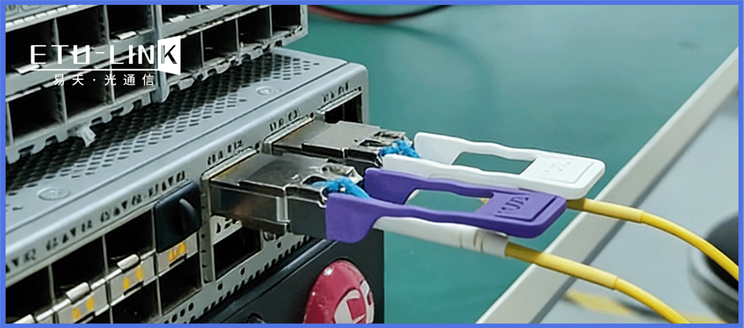
Doble fibra METRO módulo:
Ventajas
Estructura sencilla; no es necesario emparejar los módulos en ambos extremos; se pueden conectar dos cualquiera. Además, los módulos de doble fibra suelen ser más económicos que los de fibra única.
Solicitud S escenarios :Necesidades de comunicación de datos a corta distancia o situaciones que requieren alta confiabilidad y mantenimiento sencillo, como redes internas de empresas, redes de campus, redes de control industrial, etc.

IV. Costo y compatibilidad
Fibra única
METRO
módulo:
Costo
Los costos iniciales son elevados debido a la necesidad de transceptores BiDi especializados y tecnología de multiplexación por división de longitud de onda (WDM). Sin embargo, a largo plazo, el costo total podría disminuir gracias a la reducción del número de fibras ópticas.
Compatibilidad Asegúrese de que el módulo seleccionado sea compatible con los equipos de red y la infraestructura de fibra óptica existentes. Algunos módulos de fibra única pueden admitir interfaces LC comunes, lo que facilita la ampliación del ancho de banda de la red sin modificar los enlaces de fibra óptica existentes.
Doble fibra
METRO
módulo:
Costo
Los costos iniciales son bajos debido al uso de fibra monomodo y transceptores estándar. Sin embargo, a largo plazo, el costo total puede aumentar debido a la necesidad de instalar dos fibras.
Compatibilidad
:La compatibilidad es relativamente buena porque utiliza cables y transceptores de fibra óptica estándar.
Categorías
nuevo blog
Etiquetas
nuevos productos
Transceptor óptico 800G OSFP 2×DR4 1310nm 500M MPO12 DDM Lee mas
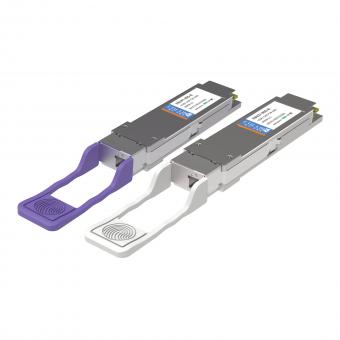
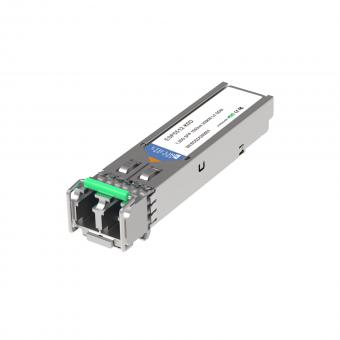
Transceptor óptico LC SFP de 1,25 G, 1550 nm y 200 km Lee mas
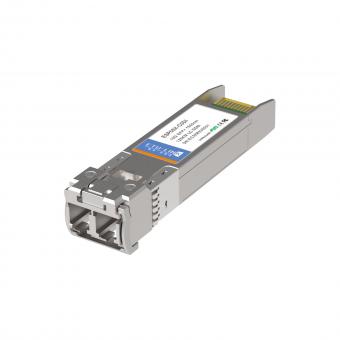

Transceptor óptico LC de 100G QSFP28 LR con sonda Lambda única de 10KM Lee mas
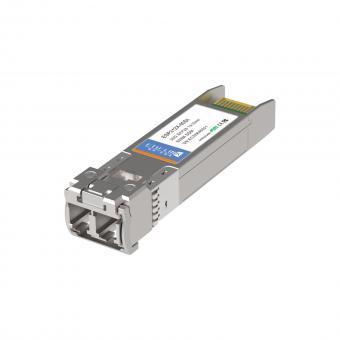
Transceptor óptico de 25G SFP28 ZR 1310nm los 80KM LC Lee mas
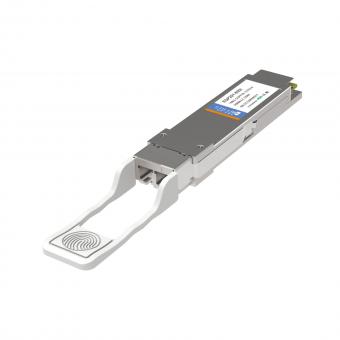
Transceptor óptico de generación II de 100G QSFP28 ZR4 80KM LC Lee mas
Para consultas sobre nuestros productos o lista de precios, déjenoslo y nos pondremos en contacto dentro de las 24 horas.


 13th Floor, Building 6, Honghualing Base, Nanshan Intelligent Manufacturing Base, Liuxian Avenue, Taoyuan Street, Xili, Nanshan District, Shenzhen, China
© Derechos de autor: 2026 ETU-Link Technology CO ., LTD Reservados todos los derechos.

Soporta red IPv6


