español



Diferencias de iteración de velocidad y selección de módulos ópticos
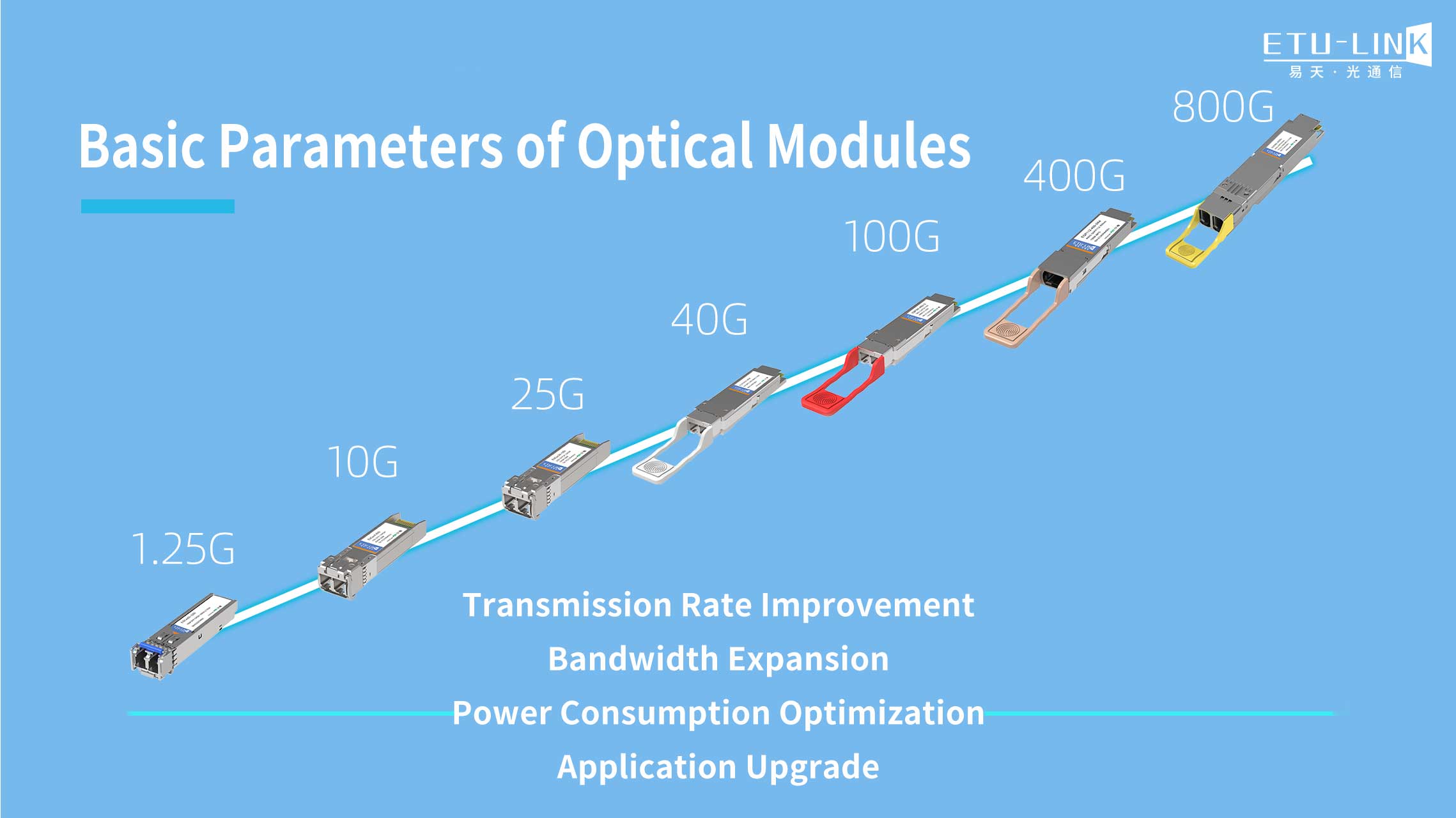
Como núcleo central de los sistemas de comunicación óptica, la iteración de velocidad de los módulos ópticos determina la eficiencia y el límite superior de la transmisión de datos, impulsando la actualización de industrias como la economía digital, la capacidad de cómputo de IA y la comunicación 5G. Desde 1.25G hasta 800G, la iteración de los módulos ópticos está acompañada de innovaciones en arquitectura, principios y rendimiento. Este artículo se centrará en tres secciones principales: principios de arquitectura, parámetros de rendimiento, y errores de selección, para proporcionar referencias de selección a los profesionales y ayudar en una implementación científica.
Ⅰ.Diferencias tecnológicas fundamentales: diseño arquitectónico y análisis de principios centrales
Las diferencias tecnológicas entre los módulos ópticos de 1.25G y 800G provienen principalmente del diseño arquitectónico iterativo y de los avances en los principios fundamentales. Los módulos con diferentes niveles de velocidad muestran diferencias claras en la arquitectura de canales, los principios de modulación y el diseño de empaquetado, lo que determina directamente sus límites de ancho de banda y sus ámbitos de aplicación. La siguiente sección analiza sucesivamente el diseño arquitectónico y los principios fundamentales de cada módulo de velocidad, categorizados según el gradiente de velocidad, para aclarar las causas raíz de estas diferencias tecnológicas.
(1)Banda de ultra alta velocidad (800G): arquitectura integrada de fotónica de silicio, optimización de la modulación de extremo frontal
La banda de ultra alta velocidad (800G) adopta una arquitectura integrada de fotónica de silicio para mejorar la integración. Los encapsulados principales son QSFP-DD y OSFP (OSFP admite refrigeración líquida). Algunos utilizan encapsulado 3D y admiten la evolución hacia 1.6T. El núcleo se basa en la optimización de la modulación PAM4, utiliza canales paralelos 8×100G y tiene una tasa de error de bits previa a FEC≤2.4E-4. Está equipado con tecnología LPO/CPO para reducir el consumo energético y es adecuado para escenarios de ancho de banda extremo como el entrenamiento de IA y la supercomputación.
(2)Banda de alta velocidad (200G, 400G): múltiples canales altamente integrados, principio de modulación optimizado
Las bandas de alta velocidad (200G, 400G) adoptan una arquitectura paralela multicanal de alta densidad. 200G utiliza QSFP56 (encapsulado), mientras que el 400G principal utiliza 8×50G (encapsulados QSFP-DD y OSFP). Algunos 400G utilizan arquitectura LPO para reducir el consumo energético. Ambos usan modulación PAM4. 400G incorpora tecnología de multiplexación por división de longitud de onda, y LPO es adecuado para escenarios de alta velocidad y corta distancia.
(3)Rango de velocidad media (25G, 40G, 100G): operación paralela multicanal, transición del principio de modulación
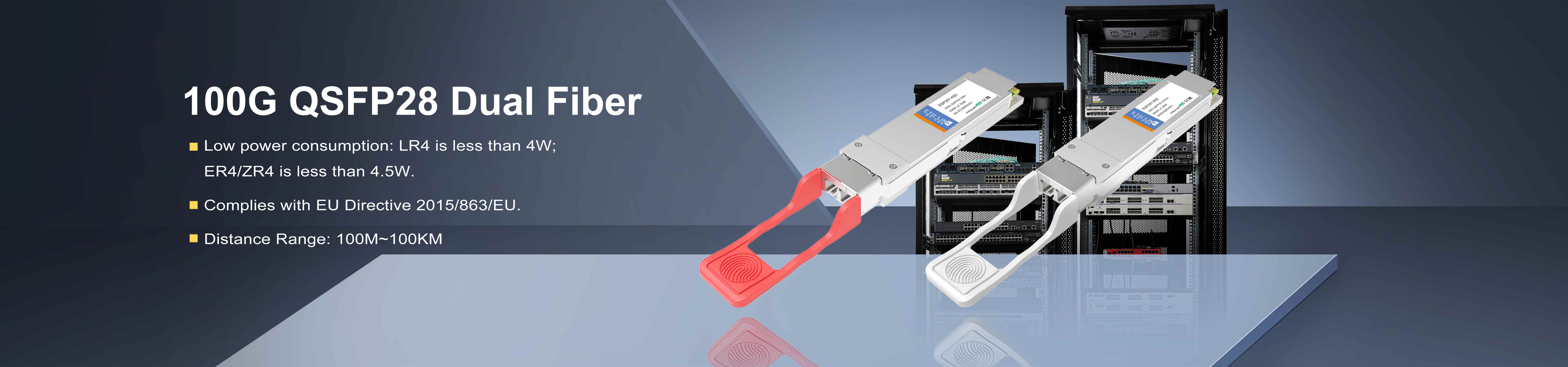
Las bandas de velocidad media (25G, 40G, 100G) están pasando gradualmente a una arquitectura paralela multicanal y a una integración mejorada. 25G utiliza el encapsulado SFP28 para operación de un solo canal, 40G utiliza el encapsulado QSFP+ para operación paralela 4×10G, y 100G utiliza el encapsulado QSFP28 para operación paralela 4×25G. En principio, la transición es de NRZ a PAM4. 25G admite doble modulación, 40G continúa utilizando NRZ y 100G utiliza NRZ combinado con multiplexación por división de longitud de onda CWDM para mejorar la utilización de la fibra al convertir de 4x25G a 4x25G. La conversión de 4x25G a 1x100G utiliza señal eléctrica NRZ y señal óptica PAM4.
(4)Banda de baja velocidad (1.25G, 10G): arquitectura de un solo canal, principio básico de modulación
La banda de baja velocidad (1.25G, 10G) adopta una arquitectura de transmisión de un solo canal, con una estructura simple, baja integración y sin necesidad de disipación térmica compleja. El encapsulado principal para 1.25G es SFP y para 10G es SFP+ Los dos encapsulados son similares y parcialmente compatibles. El núcleo de ambos adopta el principio de modulación NRZ, que presenta una tecnología sencilla, bajo consumo energético y alta estabilidad, pero tiene un límite de ancho de banda reducido. El módulo 10G añade tecnología BIDI bidireccional de fibra única para ahorrar recursos de fibra.
Ⅱ.Análisis integral del rendimiento: comparación de parámetros clave y adaptabilidad a escenarios
| Tipo | Descripción | Consumo energético | Densidad de ancho de banda | Aspectos destacados de la estabilidad | Escenarios adaptados |
| Módulo de baja velocidad | 1.25G SFPmultimodo 550 m, monomodo 20 km+ | Bajo | Baja tasa de errores de bits y tasa de fallos extremadamente baja | Acceso básico de bajo ancho de banda y larga distancia, como monitorización de seguridad y acceso a redes de campus. | |
| 10G SFP+Alcance corto 300 m, alcance largo 10 km~80 km | Bajo | Alta compatibilidad y compatibilidad con diagnósticos digitales | Ancho de banda bajo a medio, escenarios de múltiples distancias, como la red troncal empresarial y el backhaul de estaciones base 5G. | ||
| Módulo de velocidad media | 25G SFP28multimodo 100 m, monomodo 10 km | 1,2 W~2 W | Medio | Admite un amplio rango de temperatura de -40 ℃ a 85 ℃ | El núcleo está adaptado para el fronthaul 5G y puede utilizarse para la división de enlaces 100G en centros de datos. |
| 40G QSFP+multimodo 100 m, monomodo 10 km/40 km/80 km | 3 W~4 W | Medio | Tecnología madura y baja tasa de fallos | Para la actualización y el mantenimiento de escenarios existentes, como centros de datos de redes troncales antiguas y centros de datos de pequeñas y medianas empresas. | |
| 100G QSFP28: alcance corto 100 m, alcance medio a largo 2 km~80 km | 3,5 W~5 W | Alto | Pruebas completas del 100 % de todo el proceso, baja tasa de errores de bits | Escenarios de gama media a alta, como redes troncales de grandes empresas, ramales leaf de centros de datos y midhaul 5G. | |
| Módulo de alta velocidad | 200GQSFP56 multimodo 100 m, monomodo 2 km | 7 W~9 W | Alto | Tamaño compacto y alta densidad de implementación | Expansión de puertos de alta densidad para grandes centros de datos: solución de transición de 100G a 400G |
| 400G QSFP-DD/OSFP: Corto alcance de 100 m, medio a largo alcance de 2 km~10 km |
7W~12W
(LPO≤5W)
|
Extremadamente Alto |
Tasa de entrega puntual ≥99 %, admite un amplio rango de temperatura | Escenarios de alto rendimiento, como grandes centros de datos en la nube, clústeres de inferencia de IA e interconexión DCI de operadores. | |
| Módulo de velocidad ultraalta | 800G QSFP-DD800, OSFPalcance corto de 100 m, alcance medio de 500 m~2 km | 12W~18,5W |
Extremadamente Alto |
Tasa de error de bits pre-FEC ≤ 2.4E-4, admite actualizaciones fluidas. | Escenarios de ancho de banda extremo, como clústeres de entrenamiento de grandes modelos de IA, centros de supercomputación y nodos centrales de grandes proveedores de nube. |
Consideraciones clave para la selección y evitar errores comunes:
① Puntos para la Adaptación de velocidad: Combine los requisitos de ancho de banda, adapte la arquitectura al gradiente de velocidad, seleccione el modelo adecuado según sea necesario y evite perseguir ciegamente altas velocidades y desperdiciar recursos.
② Puntos para la Selección de parámetros: Preste atención a parámetros clave como el encapsulado, la distancia de transmisión y el consumo de energía, y seleccione el parámetro adecuado según el escenario, teniendo en cuenta tanto la practicidad como la estabilidad.
③ Puntos para la Mitigación de riesgos: Evite perseguir ciegamente altas velocidades y las incompatibilidades con la fibra óptica. Realice selecciones precisas según la red de fibra óptica, el centro de datos y las condiciones del equipo para prevenir riesgos potenciales con antelación.
④ Puntos para la Planificación de costos: Equilibre el costo y el rendimiento, seleccione módulos según los escenarios y reserve margen para actualizaciones.
Categorías
nuevo blog
Etiquetas
nuevos productos
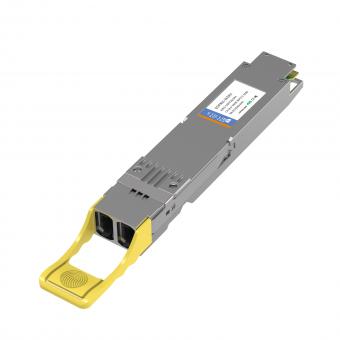
Transceptor óptico 800G OSFP 2×DR4 1310nm 500M MPO12 DDM Lee mas
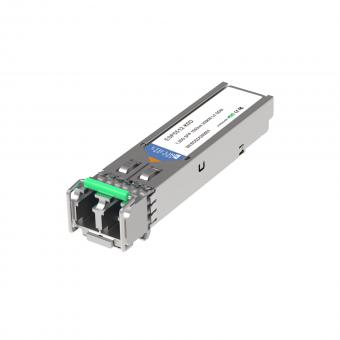
Transceptor óptico LC SFP de 1,25 G, 1550 nm y 200 km Lee mas
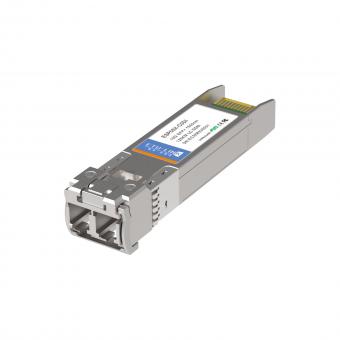

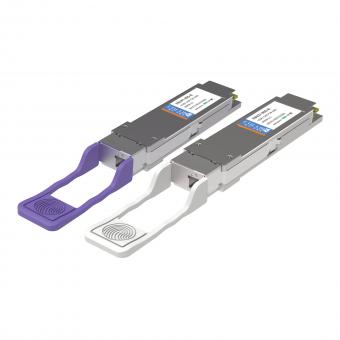
Transceptor óptico LC de 100G QSFP28 LR con sonda Lambda única de 10KM Lee mas
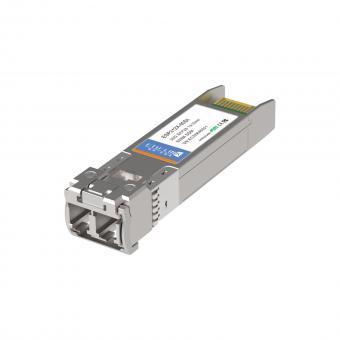
Transceptor óptico de 25G SFP28 ZR 1310nm los 80KM LC Lee mas
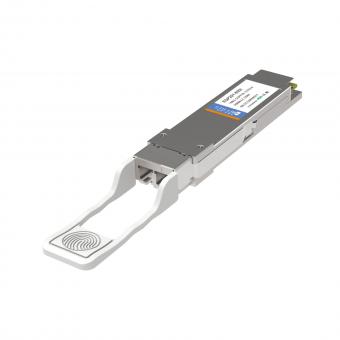
Transceptor óptico de generación II de 100G QSFP28 ZR4 80KM LC Lee mas
Para consultas sobre nuestros productos o lista de precios, déjenoslo y nos pondremos en contacto dentro de las 24 horas.


 13th Floor, Building 6, Honghualing Base, Nanshan Intelligent Manufacturing Base, Liuxian Avenue, Taoyuan Street, Xili, Nanshan District, Shenzhen, China
© Derechos de autor: 2026 ETU-Link Technology CO ., LTD Reservados todos los derechos.

Soporta red IPv6